
Teenage Facial Treatments for Acne: What Parents Should Know Before Booking
November 9, 2026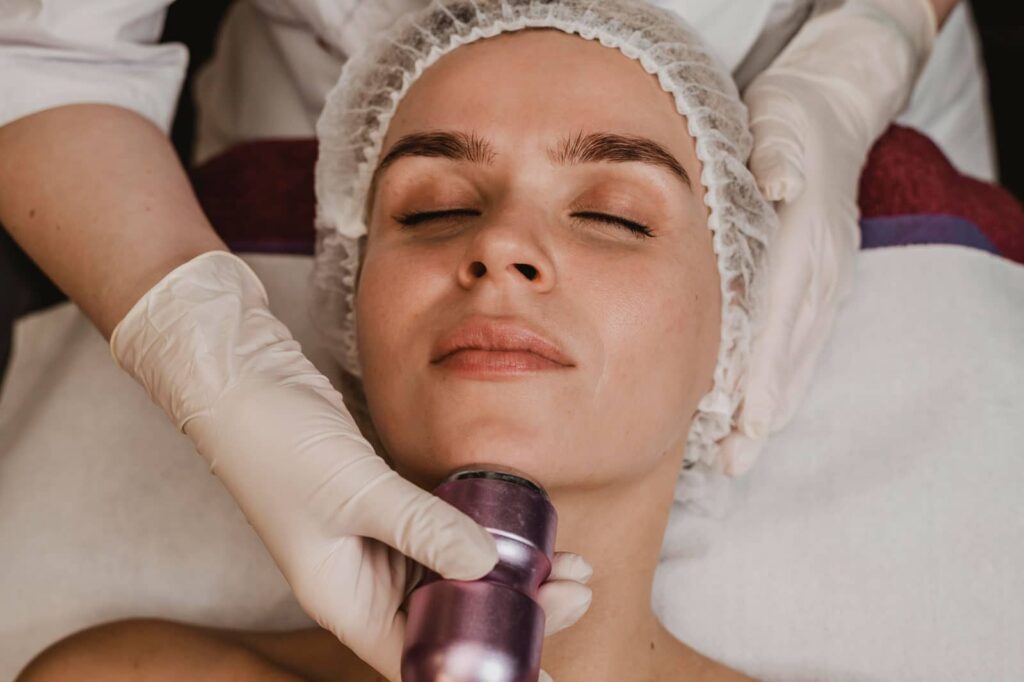
If you have been researching skin rejuvenation, you have probably seen the photos: flushed, pink skin glistening under a thin red layer. That is the vampire facial, one of the most talked-about treatments in aesthetic medicine. Strip away the dramatic name, though, and a vampire facial is microneedling with one extra ingredient: your own platelet-rich plasma (PRP).
That raises a fair question, and one we hear in consultations at Tatoyan MD Medspa almost every week. If a vampire facial is simply microneedling plus PRP, does the added step actually do more? Or are you paying a premium for a blood draw and a memorable name?
The honest answer is more nuanced than most marketing suggests. In this guide, we break down how each treatment works, what the clinical research really shows, who benefits most from a vampire facial, and how to choose a provider safely.
Vampire Facial vs Microneedling: The Short Answer
If you only read one section, make it this one:
- A vampire facial is microneedling combined with PRP. The microneedling creates controlled micro-injuries; the PRP is applied to (and sometimes injected into) the treated skin.
- For atrophic acne scars, a vampire facial appears to add measurable benefit. A meta-analysis of 14 controlled studies found the combination more effective than microneedling alone, although not every individual trial agrees.
- For fine lines, texture, and general anti-aging, the advantage is plausible but less proven. The research here is thinner and the studies are smaller.
- Technique matters more than the add-on. Needle depth, number of sessions, and candidate selection drive results more than choosing a vampire facial over microneedling does.
- Safety depends on the setting. Because a vampire facial involves drawing and handling blood, sterile technique and a licensed medical environment are non-negotiable.
What Is Microneedling? Understanding Collagen Induction Therapy
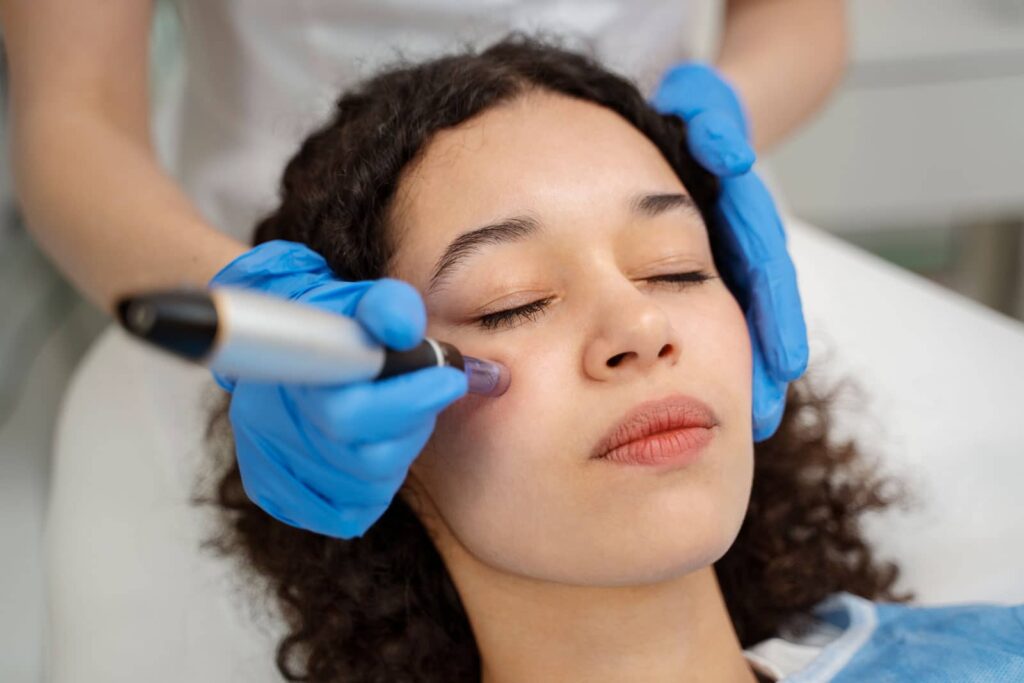
Microneedling, also called collagen induction therapy, uses a device fitted with very fine, sterile needles to create thousands of tiny, controlled channels in the skin. These micro-injuries are small enough to heal quickly but significant enough to trigger the body’s natural repair response.
How Microneedling Stimulates Collagen and Elastin
When the skin registers injury, it launches a wound-healing cascade in three overlapping phases: inflammation, proliferation, and remodeling. During this process, fibroblasts ramp up production of new collagen and elastin, the structural proteins responsible for firmness, bounce, and smooth texture. Because remodeling continues for months, microneedling results build gradually rather than appearing overnight.
In a medical setting, the practitioner adjusts needle depth for each area of the face. Thinner skin around the eyes and forehead calls for shallower settings, while acne scars on the cheeks may need deeper passes. That calibration is one of the biggest differences between a professional treatment and an at-home roller.
What Standard Microneedling Treats Best
Standard microneedling is a well-established option for:
- Atrophic acne scars (rolling and boxcar types in particular)
- Enlarged pores and uneven skin texture
- Fine lines and early wrinkles
- Mild laxity and loss of skin “bounce”
- Dull, uneven skin tone
Most patients need a series of three to six sessions, typically spaced about four to six weeks apart. If you are still weighing collagen induction against energy-based options, our guide to microneedling vs laser for skin texture and pores covers that decision in depth.
What Is a Vampire Facial? PRP Microneedling Explained
A vampire facial pairs microneedling with platelet-rich plasma, a concentrate made from a small sample of your own blood. The idea is straightforward: microneedling opens thousands of microchannels, and PRP floods those channels with your body’s own growth factors at the exact moment the skin is primed to heal.
Platelets are best known for clotting, but they also carry signaling proteins, including platelet-derived growth factor (PDGF), transforming growth factor-beta (TGF-β), and vascular endothelial growth factor (VEGF). These molecules help coordinate tissue repair, cell turnover, and new blood vessel formation. The theory behind the vampire facial is that concentrating these signals at the treatment site amplifies the collagen response microneedling already creates.
Vampire Facial, PRP Facial, or Vampire Facelift: What’s the Difference?
The terminology can be confusing, so here is a quick clarification:
- Vampire Facial® is a trademarked name for a branded PRP microneedling protocol. Many practices use the generic terms “PRP facial” or “PRP microneedling” for the same basic concept.
- PRP facial is the generic description: microneedling plus topically applied and/or injected PRP.
- Vampire facelift is a different procedure altogether. It typically combines PRP with injectable dermal fillers to restore volume, not just improve texture.
Throughout this article, we use “vampire facial” in the generic sense that most patients search for: microneedling combined with PRP.
How Platelet-Rich Plasma Is Prepared
Preparing PRP adds roughly 20 to 30 minutes to the appointment:
- Blood draw. A small amount of blood, usually comparable to a routine lab draw, is taken from the arm.
- Centrifugation. The tube spins in a centrifuge, separating red blood cells from plasma.
- Isolation. The platelet-rich layer is drawn off and prepared for application.
One important detail patients rarely hear: PRP is not standardized. Platelet concentration varies with the collection system, spin protocol, and even your own blood count on the day of treatment. This variability is one reason vampire facial studies sometimes reach different conclusions.
What Happens During a Vampire Facial Treatment
A typical vampire facial at a physician-led practice follows this sequence:
- Consultation and skin assessment to confirm you are a good candidate.
- Cleansing and topical numbing, usually for 30 to 45 minutes.
- Blood draw and PRP preparation while the numbing cream works.
- Microneedling across the treatment area at depths tailored to each zone.
- PRP application, spread over the skin so it can enter the fresh microchannels; some protocols also inject small amounts into specific scars or lines.
- Aftercare instructions, including when to wash, what to avoid, and when to resume skincare.
Plan for about 60 to 90 minutes in total for a vampire facial.
Vampire Facial vs Microneedling: 7 Key Differences
| Factor | Standard Microneedling | Vampire Facial (PRP Microneedling) |
| 1. What’s applied | Sterile glide serum, often hyaluronic acid | Your own platelet-rich plasma |
| 2. Blood draw required | No | Yes |
| 3. Appointment length | About 45–60 minutes | About 60–90 minutes |
| 4. Evidence for acne scars | Strong as a standalone treatment | Most comparative studies show added benefit |
| 5. Evidence for anti-aging | Moderate | Promising but less robust |
| 6. Extra considerations | Fewer contraindications | Not suitable for some blood and platelet disorders |
| 7. Cost per session | Lower | Typically higher, due to PRP processing |
The table makes the trade-off clear. A vampire facial is not a different mechanism; it is an enhanced version of the same mechanism. The real question is whether that enhancement is worth it for your skin and your goals.
Does Adding PRP Actually Do More? What the Research Shows
This is where vampire facial research needs a precise reading, because the evidence is genuinely mixed, and flat claims in either direction are misleading.
Where PRP Microneedling Shows a Clear Advantage: Acne Scars
The strongest evidence for the vampire facial comes from acne scar research. A 2022 meta-analysis published in Frontiers in Medicine pooled four randomized controlled trials and ten split-face studies covering 472 patients. Its conclusion: combining microneedling with PRP was more effective than microneedling without PRP for acne scars.
Split-face studies are particularly useful here. In these trials, one side of a patient’s face receives microneedling with PRP and the other side receives microneedling alone, so each person serves as their own control. Several such studies have favored the vampire facial side. Earlier research also suggests a vampire facial performs well on boxcar and rolling scars but has limited effect on deep, narrow ice pick scars, which often need other approaches such as TCA CROSS or punch techniques.
Where the Evidence Is Mixed
Not every study points the same way. A split-face trial of 36 patients published in the Journal of Cutaneous and Aesthetic Surgery found that both sides of the face improved significantly, but topical PRP offered no added advantage over microneedling alone.
How can credible studies disagree? Several factors likely explain it:
- PRP preparation varies. Different spin speeds and collection systems produce different platelet concentrations.
- Application method differs. Topical PRP alone may behave differently from PRP that is also injected intradermally.
- Outcome scales differ. Studies grade scars using different systems, which affects how “improvement” is measured.
- Sample sizes are small. Many trials enroll only 30 to 50 patients.
For anti-aging goals such as fine lines, crepey texture, and general radiance, high-quality comparative research is even more limited. The biological rationale for a vampire facial is sound, and many patients report a visible glow, but the evidence is not as strong as it is for acne scarring.
The Variables That Matter More Than the PRP Add-On
Here is the part most clinics leave out: a well-performed microneedling series will usually outperform a poorly performed vampire facial. The factors that consistently influence outcomes include:
- Appropriate needle depth for each facial zone and concern
- Completing a full series rather than a single session
- Correct candidate selection, including skin type and scar type
- Sterile, medical-grade technique and devices
- Diligent aftercare, especially sun protection
In a vampire facial, PRP is an amplifier. It can improve a good treatment plan, but it cannot rescue a poor one.
What We Still Don’t Know
Medicine is honest about uncertainty, and so are we. Open questions about the vampire facial include the optimal platelet concentration, whether injected PRP outperforms topical application, how many sessions produce the best return, and how long the added benefit lasts. Larger, standardized trials will help answer these questions over the coming years.

Who Is a Good Candidate for a Vampire Facial?
Choose a Vampire Facial If…
- You have atrophic acne scars, especially rolling or boxcar scars, where vampire facial evidence is strongest
- You want to maximize results from each session and are comfortable with a modest blood draw
- You are drawn to an autologous treatment, meaning it uses your own biological material rather than a synthetic product
- You have dull, tired-looking skin and are interested in improving overall quality and radiance
Choose Standard Microneedling If…
- Your primary concerns are enlarged pores, mild texture issues, or early fine lines
- You are needle-averse or uncomfortable with blood draws
- You are budget-conscious and would rather invest in completing a full series
- You have a medical condition that rules out a vampire facial
Who Should Avoid Both Treatments
Microneedling and the vampire facial are not appropriate for everyone. Your provider should screen carefully if you have:
- Active acne breakouts, rashes, or skin infections in the treatment area
- A history of keloid or hypertrophic scarring
- Active cold sores (patients with a history of facial herpes may need antiviral medication beforehand)
- Recent use of oral isotretinoin
- Pregnancy
- Bleeding disorders or anticoagulant therapy
For the PRP portion of a vampire facial specifically, additional caution applies to people with low platelet counts, platelet function disorders, certain blood cancers, significant anemia, or active systemic infection. Your provider may also ask you to avoid anti-inflammatory medications such as ibuprofen around your treatment, as they can affect platelet function.
Vampire Facial Recovery and Results Timeline
Recovery after a vampire facial is similar to recovery after standard microneedling, with the addition of possible bruising at the blood draw site.
Days 1–3: Redness and Sensitivity
Expect redness similar to a moderate sunburn, mild swelling, and a tight or warm sensation. Most patients avoid makeup for at least 24 hours and use only gentle cleanser and the moisturizer recommended by their provider.
Days 4–7: Peeling and Renewal
Light flaking or dryness is common as the surface renews. Avoid exfoliants, retinoids, and active acids until your provider clears you, and be strict about sunscreen.
Weeks 4–12: Visible Improvement
Collagen remodeling from your vampire facial becomes noticeable. Skin often looks smoother, firmer, and more even in tone.
Months 3–6: Peak Results
Because new collagen continues to mature, the best results from a vampire facial series typically emerge three to six months after the final session. Many patients maintain results with one or two touch-up treatments per year.
Vampire Facial Safety: Why the Provider Matters Most
Any treatment that involves needles and blood handling carries infection risk if infection control fails, and the vampire facial has one widely reported cautionary example. In 2024, the CDC published an investigation into HIV transmission linked to PRP microneedling facials at an unlicensed New Mexico spa. Investigators identified an HIV cluster associated with a facility that did not follow recommended infection control procedures or maintain client records. It was the first documented case of HIV transmission through cosmetic injection services.
That case is not a reason to fear the vampire facial itself. It is a reason to be selective about where you get it. A properly performed vampire facial uses single-use, sterile needle cartridges, closed blood collection systems, and strict handling protocols that make bloodborne transmission extremely unlikely.
Before booking any vampire facial, ask:
- Is the practice physician-supervised and appropriately licensed?
- Are needle cartridges single-use and opened in front of you?
- Is PRP prepared using a sealed, medical-grade collection kit?
- Does the clinic keep detailed treatment records?
- Who performs the treatment, and what is their training?
A reputable provider will welcome these questions.
Vampire Facial Cost: Is the PRP Upgrade Worth It?
A vampire facial almost always costs more per session than standard microneedling, because it adds a blood draw, a single-use PRP kit, centrifuge processing, and extra appointment time. Exact pricing varies by market, provider, and treatment plan.
So is the upgrade worth it? A practical way to decide:
- Yes, often worth it: for moderate atrophic acne scars, where the research most consistently supports the vampire facial.
- Possibly worth it: for overall skin quality and early aging, if your budget allows you to complete a full series either way.
- Usually not the first priority: if adding PRP would mean doing fewer total sessions. A complete microneedling series generally beats an incomplete vampire facial series.
When RF Microneedling May Be the Better Upgrade
For some patients, the most meaningful upgrade to standard microneedling is not PRP at all; it is radiofrequency (RF) energy. RF microneedling delivers heat through insulated needles into deeper layers of the skin, adding tightening and deeper remodeling to the collagen response.
At Tatoyan MD Medspa, we offer Morpheus8 RF microneedling, which penetrates deeper than conventional microneedling devices and addresses wrinkles, acne scars, and laxity. For patients whose main concern is sagging along the jawline or deeper textural scarring, RF microneedling may deliver more than a vampire facial would. In some cases, the two approaches can be sequenced as part of a broader plan.
Hair thinning is a separate conversation. If you are interested in PRP for the scalp rather than the face, see our comparison of Alma TED vs PRP for hair loss.
How Tatoyan MD Medspa Approaches the Vampire Facial
At Tatoyan MD Medspa, the goal is not to sell you the most expensive option. It is to match the treatment to your skin. Our practice operates under the medical direction of Krikor B. Tatoyan, MD, a board-certified surgeon with more than 40 years of clinical experience, and every plan begins with a thorough consultation.
During that visit, we assess your skin type, scar pattern, medical history, and goals, then explain honestly whether a vampire facial, standard microneedling, Morpheus8, or a combination is most likely to deliver the results you want. If a vampire facial is unlikely to add meaningful value for your concerns, we will tell you.
Ready to find out which approach fits your skin? Book a consultation with Tatoyan MD Medspa.
Frequently Asked Questions About the Vampire Facial
1. Is a vampire facial better than regular microneedling?
For atrophic acne scars, the best available evidence suggests a vampire facial produces better results than microneedling alone, although some individual studies found no added benefit. For general rejuvenation, the advantage is plausible but less firmly established. The right choice depends on your concerns, budget, and medical history.
2. How many vampire facial sessions will I need?
Most patients benefit from a series of three to four vampire facial sessions spaced about four to six weeks apart. Deeper acne scarring may require more. After completing a series, many patients schedule one or two maintenance treatments per year.
3. Does a vampire facial hurt?
With topical numbing cream, most patients describe the microneedling portion as a scratchy or vibrating sensation rather than pain. Bony areas such as the forehead and upper lip can feel more sensitive. The blood draw feels like a routine lab test.
4. How long do vampire facial results last?
Because a vampire facial stimulates your own collagen, improvements can last a year or longer. Results still change with natural aging, sun exposure, and lifestyle, which is why daily sunscreen and periodic maintenance sessions help preserve them.
5. Is a vampire facial safe?
When performed in a licensed, physician-supervised setting with single-use sterile needles and closed PRP collection systems, a vampire facial is considered low risk. Common side effects include temporary redness, swelling, and bruising. Serious complications are rare and typically linked to unlicensed providers or poor infection control.
The Bottom Line
So, does adding PRP actually do more? For acne scars, the evidence says a vampire facial often does. For general anti-aging, it may help, but it is not a guaranteed upgrade. And in every case, the quality of the treatment matters more than the name on the menu.
A vampire facial is a smart choice when it is matched to the right patient and performed in the right setting. Standard microneedling remains an excellent, evidence-backed treatment on its own. At Tatoyan MD Medspa, we will help you understand the difference and choose with confidence.
This article is for educational purposes and does not replace an individual medical consultation. Treatment suitability and results vary from person to person.