
What Is the Best Female Hair Loss Treatment for Postpartum Shedding?
September 28, 2026
Softening along the jawline, a neck that has lost its definition, fine crepey lines that makeup can’t hide. These are the concerns that bring most patients to ask about radiofrequency skin tightening, and two names tend to surface early in their research: Forma by InMode and EndyMed’s 3DEEP technology. Both are non-invasive. Both use controlled heat to rebuild collagen. Both promise little or no downtime. So how do you decide? The Forma vs EndyMed question deserves a better answer than brand loyalty, and that is what this physician-led guide sets out to give you.
At Tatoyan MD Medspa, we believe trust starts with disclosure. Our practice offers Forma, along with Morpheus8 RF microneedling. We do not offer EndyMed. Even so, we’ll walk through EndyMed fairly, including the points where it holds a genuine edge. By the end, you’ll understand how each device works, what the evidence actually shows, and which patients tend to do best with each.
Our Medical Director, Krikor B. Tatoyan, MD, is a board-certified general surgeon with more than four decades of experience in surgical and cosmetic medicine. That perspective matters in any Forma vs EndyMed discussion, because knowing when radiofrequency will work also means knowing when it won’t.
Forma vs EndyMed: The Quick Verdict
- Same goal, different engineering. Both devices heat the dermis to trigger collagen remodeling without injuring the skin’s surface.
- Forma regulates heat. Its bipolar RF handpiece reads skin temperature in real time and automatically limits energy at the target.
- EndyMed distributes heat. Its 3DEEP multisource system uses six phase-controlled generators to drive energy deeper while sparing the epidermis.
- Regulatory edge to EndyMed. EndyMed’s office handpieces are FDA-cleared for mild-to-moderate facial wrinkles; Forma’s clearance covers other indications.
- No head-to-head data. We’re not aware of any published trial comparing the two directly, so provider expertise outweighs brand.
- Best for mild-to-moderate laxity. Pronounced sagging usually needs RF microneedling or surgery.
The Science Behind RF Skin Tightening
Before comparing Forma vs EndyMed directly, it helps to understand what all RF devices have in common. Radiofrequency energy is a form of high-frequency electrical current. As it passes through skin, the tissue resists it, and that resistance generates heat. Once the dermis reaches therapeutic temperatures, existing collagen fibers contract, producing the mild tightening many patients feel immediately after treatment. The more meaningful change comes later. Controlled heat signals fibroblasts, the skin’s repair cells, to produce fresh collagen and elastin over the following months. This process, known as neocollagenesis, is what makes RF skin tightening results gradual, natural-looking, and durable.
RF has another practical advantage: melanin doesn’t absorb it the way it absorbs laser light. The American Academy of Dermatology’s guide to firming sagging skin explains that non-invasive tightening procedures are safe for all skin colors, involve little to no downtime, and deliver results that develop gradually, with radiofrequency results typically peaking around six months after treatment.

Monopolar, bipolar, and multisource: three ways to deliver RF
Understanding RF delivery explains most of the Forma vs EndyMed difference:
- Monopolar RF sends current from a treatment tip through the body to a grounding pad. It penetrates deeply but can be uncomfortable and is usually performed in a single high-energy session.
- Bipolar RF moves current between two electrodes inside one handpiece. Heat stays focused and controlled, which keeps treatment comfortable. Forma uses this design.
- Multisource RF coordinates several electrodes and generators at once to shape how energy travels through tissue. EndyMed’s 3DEEP technology is a phase-controlled form of multisource RF.
The central challenge: heating deep while protecting the surface
Every skin tightening device faces the same balancing act. Heat the dermis too little and collagen won’t respond. Heat it too much, or let the surface overheat, and you risk burns, blisters, or pigment changes. A review of non-invasive skin tightening technologies published in the Journal of Cosmetic Dermatology found that nearly every device relies on this same principle of dermal heating with epidermal protection; the real distinctions lie in how each one achieves that balance. Forma and EndyMed solve the problem in very different ways.
Forma Explained: Bipolar RF With Real-Time Temperature Control
Forma is a non-invasive applicator developed by InMode, the company behind Morpheus8 and the Evolve Transform body contouring system. It uses bipolar radiofrequency, so current flows between two electrodes in the handpiece instead of traveling through the body. The energy stays concentrated in the skin directly under the applicator.
What sets Forma apart is its thermal feedback loop. A built-in sensor continuously monitors skin surface temperature, and the software automatically cuts back energy once the preset target is reached. InMode’s FDA submission for its newer i-Forma applicator describes tissue heating of up to roughly 42°C, a range that stimulates collagen while remaining comfortable. During treatment, the provider moves the handpiece in slow, continuous passes, holding each zone at therapeutic temperature for several minutes.
What a Forma session feels like
Patients often compare Forma to a hot stone massage. There’s no numbing cream, no needles, and no recovery time. Mild redness may appear and typically fades within a few hours, so you can head straight back to work or your evening plans. That pairing of comfort and zero downtime is why Forma is often called “the Red Carpet Facial.”
Best treatment areas for Forma
Forma is one of the more versatile non-invasive RF options. At Tatoyan MD Medspa, we use it for:
- Early laxity along the jawline, cheeks, and neck
- Fine lines and crepey skin texture
- Loss of firmness from aging or weight fluctuation
- Body areas including the abdomen, upper arms, inner and outer thighs, and knees
Most patients follow a series of weekly sessions over six to eight weeks, adjusted after an in-person evaluation. Those with very mild laxity may need fewer sessions spaced further apart.
EndyMed Explained: 3DEEP Multisource, Phase-Controlled RF
EndyMed Medical, headquartered in Israel, built its platform on a patented technology called 3DEEP. Rather than relying on a single electrode pair, EndyMed handpieces use an electrode array powered by six independent RF generators. By controlling the electrical phase between them, the system causes currents to repel each other near the surface, pushing energy deeper into the dermis. EndyMed’s published research describes this as a way to achieve substantial, pigment-independent dermal heating without pain and without the need for active cooling.
Put simply, EndyMed protects the epidermis through physics, by changing how energy is distributed, while Forma protects it through monitoring, by regulating how much energy is delivered. That single design choice is the technical core of Forma vs EndyMed.
Inside the EndyMed platform
EndyMed is modular, so what you receive depends on how a clinic has configured its system. Options may include:
- 3DEEP tightening handpieces, such as the Small, Mini Shaper, and Shaper, for the face, neck, and body
- FSR (Fractional Skin Resurfacing), which creates microscopic ablative points to refine texture and wrinkles
- Intensif, EndyMed’s RF microneedling handpiece, similar in concept to Morpheus8
What the EndyMed research shows
EndyMed skin tightening has a reasonable body of published clinical work. One 25-patient study in the Journal of Clinical and Aesthetic Dermatology reported meaningful skin tightening and body contouring after five to eight treatments that patients described as painless. Additional studies in Asian patients reported good tolerability and measurable improvement in facial laxity. As with most aesthetic device research, these studies are relatively small and often involve the manufacturer’s investigators, which is worth keeping in perspective.
Forma vs EndyMed Comparison Table: 7 Key Differences
The table below captures the Forma vs EndyMed decision at a glance.
| Factor | Forma (InMode) | EndyMed (3DEEP) |
| 1. RF technology | Bipolar RF (one electrode pair) | Multisource, phase-controlled RF (six generators) |
| 2. Heat control | Real-time temperature sensor with automatic energy cutoff | Phase control repels current at the surface and drives it deeper |
| 3. FDA 510(k) indication | Temporary relief of minor muscle aches and spasm; temporary improvement in local circulation | Non-invasive treatment of mild-to-moderate facial wrinkles and rhytides (office handpieces) |
| 4. Comfort | Warm, hot stone massage sensation | Gentle warmth; described as painless in studies |
| 5. Typical protocol | Weekly sessions for about 6–8 weeks | A series of sessions; published protocols range from about 3 to 8 |
| 6. Step-up option on the same platform | Morpheus8 RF microneedling | Intensif RF microneedling and FSR resurfacing |
| 7. Available at Tatoyan MD Medspa | Yes | Not currently |
The similarities are just as important. Both treatments are non-invasive, safe across skin tones, free of downtime, and produce results that build gradually. If comfort and recovery are your main concerns, Forma vs EndyMed is close to a tie.
FDA Clearance: The Detail Most Comparisons Leave Out
Few clinic websites address regulatory status, yet it’s one of the most useful facts in the Forma vs EndyMed comparison.
Most aesthetic energy devices in the United States reach the market through the FDA’s 510(k) process. Under this pathway, the FDA “clears” a device as substantially equivalent to one already on the market, for specific, listed indications. Clearance is not the same as approval, and it covers only the indications stated. You can verify any device yourself in the FDA 510(k) Premarket Notification database.
Here’s what the public record shows:
- EndyMed PRO handpieces are cleared for the non-invasive treatment of mild-to-moderate facial wrinkles and rhytides. The EndyMed PRO MAX system received a 2025 clearance extending that facial wrinkle indication to its Mini Shaper Max and Small Max handpieces.
- Forma and i-Forma applicators are cleared for temporary relief of minor muscle aches and pain, relief of muscle spasm, and temporary improvement of local blood circulation.
So what does this mean for you? Using Forma for skin tightening is a physician-directed use, a common and lawful practice in aesthetic medicine, supported by clinical experience and broader research on temperature-controlled bipolar RF. It is not a red flag about safety. It does mean EndyMed carries a more specific regulatory claim for facial wrinkles, and you deserve that information when weighing Forma vs EndyMed. A provider who can’t explain a device’s clearance in plain language should give you pause.

Forma vs EndyMed Results: Sessions, Timeline, and Longevity
Here is the most important point about Forma vs EndyMed results: we’re not aware of any published head-to-head trial. Claims that one device is “more powerful” are extrapolations from separate studies with different protocols, treatment areas, and patient populations. The Journal of Cosmetic Dermatology review noted a broader shortage of comparative trials across non-invasive tightening technologies, which is exactly why careful patient selection matters so much.
What the evidence does support:
- Change is gradual. Many patients feel slight tightening right away, but visible improvement unfolds over two to six months.
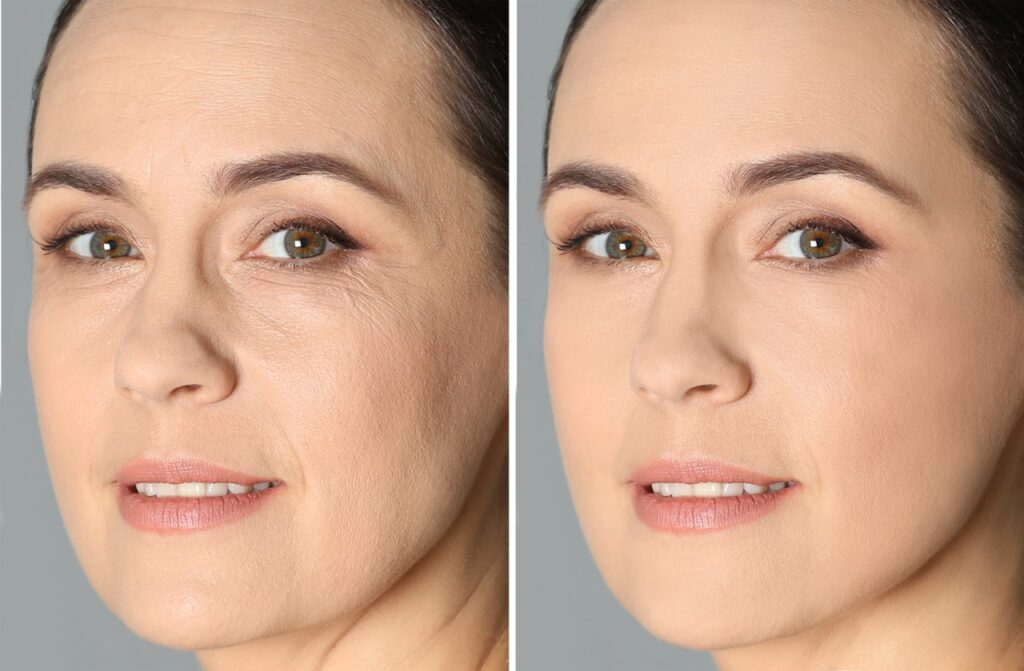
- Expectations should be realistic. RF delivers firmer, smoother, refreshed skin, not facelift-level lifting.
- Downtime is minimal. Temporary redness and mild swelling are the most common effects for both.
- Maintenance pays off. According to the AAD, radiofrequency results can last two to three years with proper skin care.
How many treatments you’ll need
Both technologies build results through a series rather than a single dramatic session. Forma typically involves six to eight weekly treatments. Published EndyMed protocols vary by handpiece and area, generally ranging from three to eight sessions spaced at least a week apart. Your ideal number depends on skin thickness, the degree of laxity, age, and habits such as sun exposure and smoking.
When results appear and how long they last
The collagen you build is genuine new tissue, but the aging process continues. Patients maintain results best with periodic touch-up sessions, daily broad-spectrum sunscreen, and a medical-grade skin care routine. As an authorized skinbetter science® provider, Tatoyan MD Medspa often pairs RF plans with physician-guided home care to protect your investment between visits. To understand why laxity develops in the first place, read our guide to the skin aging process, stage by stage.
What affects the cost
Pricing for both treatments varies by region, provider, and treatment area, so be wary of any single “average” figure online. In a fair Forma vs EndyMed cost comparison, compare the total price of a full series rather than a per-session rate, since protocol lengths differ. Ask whether maintenance sessions are included, which areas the plan covers, and who performs the treatment. A low per-session price is rarely good value if it buys extra sessions, a less experienced provider, or a plan that was never matched to your laxity.
Choosing Between Forma and EndyMed: Who Is the Right Candidate?
Instead of asking which device is better in general, a physician asks which is better for you. Every Forma vs EndyMed recommendation should rest on three factors: your skin, your goals, and your provider’s experience.
The AAD notes that the best candidates for non-surgical skin tightening keep a stable, healthy weight, avoid smoking, protect their skin from the sun, and have only a modest amount of sagging. Skin tightening isn’t appropriate during pregnancy, with an active skin infection, or while taking certain medications. Patients with pacemakers or other implanted electronic devices generally should not have RF treatment, and metal implants near the treatment area call for medical review first.
Signs Forma may be your better fit
- You have early-to-moderate laxity and want both visible firming and prevention
- You prefer a relaxing, zero-downtime treatment that fits into a lunch break
- You want to treat facial and body areas with a single technology
- You’d like the option to step up to Morpheus8 later with the same team
Signs EndyMed may be your better fit
- A device with a specific FDA facial wrinkle clearance is a priority for you
- Your chosen provider has deep experience with 3DEEP protocols
- You want to combine tightening with FSR resurfacing on one platform
When you need more than non-invasive RF
If you have heavy jowling, significant neck laxity, or loose skin after major weight loss, non-invasive RF alone is likely to disappoint. That isn’t a shortcoming of Forma or EndyMed; it reflects how much heat any surface treatment can safely deliver. Better options may include RF microneedling such as Morpheus8, which places energy beneath the skin’s surface, or a surgical procedure. If you’re also weighing resurfacing options, our comparison of microneedling vs laser for skin texture can help. Because Dr. Tatoyan is an experienced surgeon, our team can tell you candidly when a non-surgical route won’t meet your goals.
Side Effects, Safety, and Questions to Ask Your Provider
When performed correctly, both platforms have strong safety records. The most common effects are mild and short-lived:
- Redness and warmth lasting a few hours
- Slight swelling
- Temporary skin sensitivity
Rare complications such as burns or blistering usually stem from technique or settings, not the device. That’s why the provider matters more than the brand in any Forma vs EndyMed comparison. Before booking, ask:
- Who supervises treatments, and what medical credentials do they hold?
- How many RF skin tightening treatments has your team performed?
- What results can I realistically expect, and how will we track them?
- What’s the plan if RF alone isn’t enough for my level of laxity?
RF Skin Tightening at Tatoyan MD Medspa
Every RF plan at Tatoyan MD Medspa begins with a physician-guided consultation. We evaluate your skin quality, degree of laxity, medical history, and goals, then design a plan around you rather than a preset package. For some patients, that means Forma alone. For others, it means combining Forma with Morpheus8, injectable wrinkle reducers and volume enhancers, or Lumecca IPL for tone and pigment. And sometimes, it means an honest conversation about surgery.
Our Forma treatments are tailored to the face, neck, and body, typically delivered weekly over six to eight weeks. When deeper remodeling is needed, Morpheus8 adds fractional RF microneedling that reaches well below the skin’s surface. You can explore our full menu of aesthetic services to see how these treatments fit together.
If you’ve been weighing Forma vs EndyMed and want advice based on your own skin rather than a brochure, our team would be glad to help.
Forma vs EndyMed FAQs
1. Which is better for skin tightening, Forma or EndyMed?
Neither has been proven superior in a published head-to-head trial. Forma offers comfortable, temperature-controlled treatment for both face and body, while EndyMed’s 3DEEP design drives heat deeper with less surface heating and holds an FDA clearance for facial wrinkles. The right answer to Forma vs EndyMed depends on your laxity, your goals, and your provider’s experience.
2. Is Forma or EndyMed painful?
Neither treatment is typically painful. Forma feels like a warm hot stone massage, and EndyMed sessions have been described as painless in clinical studies. Neither requires numbing cream, and you can return to normal activities immediately.
3. How long until I see results from RF skin tightening?
Many patients notice slight tightening right after a session, but visible improvement builds over two to six months as new collagen forms. Results are most apparent after completing the full series, whichever side of the Forma vs EndyMed decision you land on.
4. Are Forma and EndyMed safe for darker skin tones?
Yes. RF energy isn’t absorbed by melanin, so both technologies are considered safe for all skin types when performed by an experienced provider. Settings should still be tailored to your individual skin.
5. Can Forma or EndyMed be combined with other treatments?
Yes. RF skin tightening pairs well with RF microneedling, injectables, and medical-grade skin care. At Tatoyan MD Medspa, we frequently combine Forma with Morpheus8 or injectables for more complete facial rejuvenation.
Final Thoughts on Forma vs EndyMed
Forma vs EndyMed has no universal winner. Both are thoughtfully engineered, non-invasive RF skin tightening technologies that use controlled heat to rebuild collagen. Forma manages heat through real-time temperature monitoring; EndyMed spreads it through multisource phase control. EndyMed holds a more specific FDA facial wrinkle clearance, while Forma offers a comfortable, versatile treatment within an ecosystem that includes Morpheus8.
Ultimately, the deciding factor is you: your degree of laxity, your goals, and the expertise of the physician guiding your care. To learn whether Forma, Morpheus8, or another option is right for you, book a consultation at Tatoyan MD Medspa or call (818) 848-6688.