
Forma vs EndyMed: A Physician’s Guide to Choosing the Right RF Skin Tightening Treatment
October 12, 2026
Brown spots that refuse to fade, redness that lingers, a complexion that looks tired even when you are not. If that sounds familiar, you have probably come across two of the most talked-about light treatments in aesthetic medicine: Lumecca and BBL. Both are intense pulsed light (IPL) photofacials, both are trusted by respected physicians, and both can transform sun-damaged skin. Choosing between them is where it gets confusing. The Lumecca vs BBL decision hinges on how each device delivers light, how many appointments you are willing to commit to, and which skin concerns matter most to you.
At Tatoyan MD Medspa in Sherman Oaks, we offer Lumecca IPL photofacials under the medical direction of Krikor B. Tatoyan, MD, a board-certified surgeon with more than four decades of clinical experience. In the spirit of transparency: we selected Lumecca for our practice, and we do not offer BBL. That is exactly why we want this Lumecca vs BBL guide to be balanced. You deserve the facts on both devices, including their limitations, before you book anything.
Quick answer: Lumecca and BBL are both IPL photofacials for sun damage, brown spots, and redness. Lumecca packs very high peak power into a focused band of light, so most patients see clearance in 1–3 sessions. BBL spans a broader wavelength range with more filters, so it can also treat active acne and unwanted hair, and it is designed around a treatment series followed by ongoing maintenance. Put simply, Lumecca vs BBL comes down to speed and intensity versus versatility and long-term upkeep.
Lumecca vs BBL Side by Side: IPL Photofacial Comparison Chart
Use this chart as a quick reference. Each Lumecca vs BBL row is explained in depth further down.
| Feature | Lumecca (InMode) | BBL HERO / HEROic (Sciton) |
| 1. Maker and platform | InMode; same technology family as Morpheus8 and Forma | Sciton; JOULE X and mJOULE platforms, alongside MOXI and HALO lasers |
| 2. Wavelengths and filters | 515–1200 nm; two handpieces (515 nm and 580 nm) | 420–1400 nm; seven swappable filters from 420 to 800 nm |
| 3. Power and technique | Very high peak power (3.3 kW/cm²); stationary “stamping” pulses | Several lower-energy passes in motion; HEROic tracks handpiece position |
| 4. Typical sessions | 1–3 for most pigment and vascular concerns | Usually a series of about three, then maintenance |
| 5. Concerns treated | Sun damage, brown spots, freckles, redness, broken capillaries, rosacea | All of these, plus active acne, hair reduction, and mild laxity |
| 6. Comfort and recovery | Stronger snap per pulse; spots darken, then flake within about a week | Generally gentler per pass; similar darkening and flaking |
| 7. Long-term approach | Rapid correction, then occasional touch-ups | “Forever Young” maintenance program backed by early gene-expression research |
How IPL Photofacials Work: The Science Lumecca and BBL Share
Neither device is technically a laser. A laser produces a single wavelength of light. An intense pulsed light system fires a flashlamp that releases a broad spectrum of wavelengths, then filters out the shorter ones so only the useful range reaches your skin. That light is absorbed by specific color targets called chromophores:
- Melanin, the pigment in sun spots, freckles, and age spots
- Hemoglobin, the red pigment inside broken capillaries, spider veins, and flushed skin
- The deeper dermis, where gentle warming may encourage collagen renewal over time
Once absorbed, the light turns into heat, breaking down the target while sparing most of the surrounding tissue. Dermatologists call this selective photothermolysis. A peer-reviewed review of intense pulsed light indexed by the U.S. National Library of Medicine concluded that most comparative trials show IPL achieving results similar to lasers for vascular lesions, pigmented lesions, and photodamaged skin.
Is BBL Just Another IPL?
In short, yes, with an asterisk. BroadBand Light is Sciton’s trademarked name for its filtered pulsed-light system. Sciton markets BBL as a category of its own, and its engineering, filter selection, and branded protocols do set it apart from older IPL machines. Underneath the branding, though, BBL and Lumecca rely on the same physics. That is why any honest Lumecca vs BBL comparison is a matchup between two premium IPL platforms, not a laser versus a light.
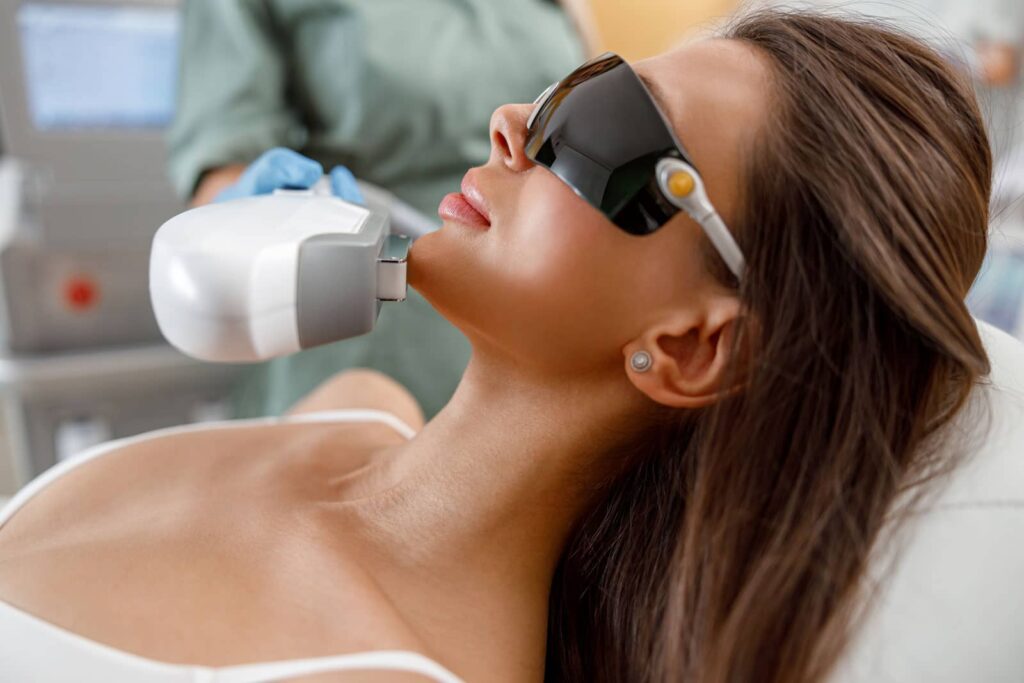
What Is Lumecca IPL?
Lumecca comes from InMode, the manufacturer behind Morpheus8 and Forma. What sets it apart is peak power. A 2016 device evaluation measured Lumecca’s peak power at 3.3 kW/cm², higher than most IPL systems, and InMode reports that the device delivers up to three times more energy in the 500–600 nm range, where pigment and blood absorb light most strongly.
Lumecca at a glance:
- Wavelength range: 515–1200 nm
- Handpieces: Lumecca 515 for pigment and vessels, and Lumecca 580 for vascular concerns or a gentler approach when bruising is a risk
- Treatment window: 30 × 10 mm
- Cooling: Sapphire contact cooling to protect the skin’s surface
At Tatoyan MD Medspa, we use Lumecca on the face, neck, chest, hands, arms, and legs, which is essentially anywhere the sun has left its signature. You can view treatment details and before-and-after photos on our Lumecca skin brightening page.
What Is BBL (BroadBand Light)?
BBL is Sciton’s family of pulsed-light devices, which has evolved through several generations. Sciton reports that BBL HERO (short for High Energy Rapid Output), released in 2020, runs four times faster, with three times the peak power and double the cooling of the original BBL. In 2024 came BBL HEROic, which uses motion tracking to follow the handpiece’s position and space pulses evenly, especially across larger or contoured areas. Because older BBL units are still in use, ask which generation a clinic has when you compare Lumecca vs BBL.
BBL at a glance:
- Wavelength range: 420–1400 nm
- Smart Filters: 420, 515, 560, 590, 640, 695, and 800 nm
- Platforms: Sciton JOULE X and mJOULE
- Branded programs: Forever Young BBL (anti-aging maintenance), Forever Clear BBL (acne), and Forever Bare BBL (hair reduction)
The 7 Key Differences Between Lumecca vs BBL
Here is where these two IPL photofacials genuinely diverge, and why each difference matters for your outcome.
1. Manufacturer, Platform, and Treatment Philosophy
InMode designed Lumecca as one part of a larger aesthetic ecosystem that includes radiofrequency microneedling (Morpheus8), radiofrequency skin tightening (Forma), and diode laser hair removal (DiolazeXL). Lumecca’s role in that lineup is narrow and deliberate: clear pigment and vessels as efficiently as possible.
Sciton pairs BBL with its own lasers, including MOXI and HALO for resurfacing. The BBL philosophy is breadth and repetition: one handpiece that handles many concerns and is meant to be revisited regularly for years.
What this means for you: At Tatoyan MD Medspa, Lumecca works hand in hand with Morpheus8 and Forma, so color correction, texture refinement, and firming can be coordinated in a single plan.
2. Wavelength Spectrum and Filter Options
Of all the Lumecca vs BBL differences, this one drives most of the others.
- Lumecca emits 515–1200 nm through two handpieces, with output concentrated in the 500–600 nm band, which is ideal for sun spots and visible vessels.
- BBL emits 420–1400 nm through seven swappable filters. The 420 nm filter targets acne-causing bacteria, 515 nm addresses pigment, 560 nm treats vessels, 590 and 640 nm reach deeper lesions and hair, and 590, 695, and 800 nm provide deeper heating aimed at mild laxity.
What this means for you: Lumecca specializes in the two concerns most people bring to a photofacial, pigment and redness. BBL spreads its capability across a longer list of treatments.
3. Peak Power and Delivery Technique
Each Lumecca pulse releases a large dose of energy in a fraction of a second. Providers usually work in a stamping pattern: place the handpiece, fire, then step to the next section of skin. In the 2016 evaluation, the authors concluded that this peak power makes Lumecca’s effect on vascular lesions comparable to pulsed dye laser, long regarded as a benchmark for treating vessels.
BBL HERO takes a different approach. The provider sweeps the handpiece continuously across the skin, layering multiple lower-energy passes that build the effect gradually. BBL HEROic adds position tracking so each pulse lands evenly while the handpiece moves.
What this means for you: Concentrated power excels at clearing defined spots and vessels quickly. Gradual sweeping excels at uniform coverage of large zones such as the chest, arms, and legs.
4. Number of Sessions and Speed of Results
Ask patients what tipped their Lumecca vs BBL decision, and the answer is often the number of appointments.
- Lumecca: Age spots, sun damage, vessels, and rosacea typically show significant clearance in 1–3 sessions, compared with the 4–6 often needed with standard IPL. Many patients notice brighter skin after the very first visit.
- BBL: Providers commonly suggest an initial series of about three sessions spaced roughly four or more weeks apart, then maintenance to hold results.
What this means for you: If you have a deadline, a busy calendar, or simply want correction with fewer visits, Lumecca’s compact course is a clear advantage. If you like a steady routine aimed at long-term prevention, BBL’s series-and-maintenance rhythm may feel natural.
5. Skin Concerns Each Device Treats
Both devices cover the core photofacial concerns:
- Sun damage, age spots, and brown spots
- Freckles and blotchy, uneven skin tone
- Redness, flushing, and rosacea
- Broken capillaries and spider veins (telangiectasias)
- Poikiloderma, the reddish-brown sun damage that often appears on the neck and chest
BBL’s filter range extends further into:
- Active acne, using 420 nm blue light
- Hair reduction, using longer-wavelength filters
- Mild skin laxity, using deeper-heating filters
What this means for you: For pigment and redness, Lumecca has you covered. If you want one device that also tackles breakouts or unwanted hair, BBL is more flexible. A practice with several technologies can fill those gaps in other ways. At Tatoyan MD Medspa, we treat unwanted hair with DiolazeXL laser hair removal and texture concerns with Morpheus8.
6. Comfort, Downtime, and Skin Type Compatibility
Both are considered no-downtime treatments, yet they feel different.
Comfort: Because Lumecca concentrates its energy into each flash, most patients notice a quick, firm snap, often compared to an elastic band. BBL HERO distributes energy over several gentler passes, which many patients find easier to tolerate.
Recovery: With either device, expect warmth and pinkness that typically fade within hours. Within 24–48 hours, treated spots darken (patients often compare them to coffee grounds) and then flake off over roughly a week. Because Lumecca delivers more energy per visit, that darkening can be more noticeable after a single session.
Skin type: IPL performs best when there is clear contrast between the target and the skin around it. Lumecca is generally used on Fitzpatrick skin types I–IV, from very fair to light brown. Sciton markets BBL HERO for types I–V, relying on longer-wavelength filters for more pigmented skin. For deeply pigmented skin, neither device is a first choice, because the risk of burns and pigment changes climbs.
What this means for you: In the Lumecca vs BBL decision, your skin tone may steer the recommendation, which is why an in-person evaluation is essential.
7. Research, Maintenance Model, and Total Cost
BBL has an intriguing scientific backstory. In a 2013 Stanford pilot study published in the Journal of Investigative Dermatology, researchers found that BBL treatment shifted the gene expression of aged skin toward a younger pattern: of 2,265 genes altered by aging, 1,293 moved back toward youthful levels. A separate retrospective study reported that patients treated regularly with BBL over 5 to 11 years showed reduced and delayed signs of skin aging.
Keep that in perspective. The Stanford study involved only five treated women aged 50 and older, compared against five women aged 30 or younger. Investigators in both studies disclosed ties to Sciton, and Sciton itself states that BBL is not FDA-cleared for changing gene expression or for anti-aging. The research is encouraging, not conclusive. Lumecca’s published data, meanwhile, centers on how quickly and completely it clears pigment and vessels.
Cost: Per-session prices vary with the practice, the area treated, and your region. The more revealing number is the total over time. Lumecca’s shorter course usually means fewer upfront visits, with occasional touch-ups as new sun damage develops. BBL typically pairs an initial series with recurring maintenance sessions each year. For a fair Lumecca vs BBL cost comparison, ask for a complete treatment-plan estimate rather than a single session price.
Lumecca vs BBL Recovery Timeline: What Happens After Treatment
When it comes to recovery, Lumecca vs BBL looks very similar. Here is the typical course for our Lumecca patients:
- Right after treatment: Warmth and mild redness, usually gone within an hour
- 24–48 hours: Brown spots darken and can briefly look more prominent
- About one week: Darkened pigment flakes away, revealing a more even tone
- Up to two weeks: Treated vessels fade and brightness continues to improve
- After additional sessions: Results compound into clearer, more radiant skin
Some vessels blanch and vanish immediately; others change color and fade over several days. Throughout, diligent sun protection is essential. Freshly treated skin is more sensitive to UV light, and new sun exposure is the quickest way to invite spots back.
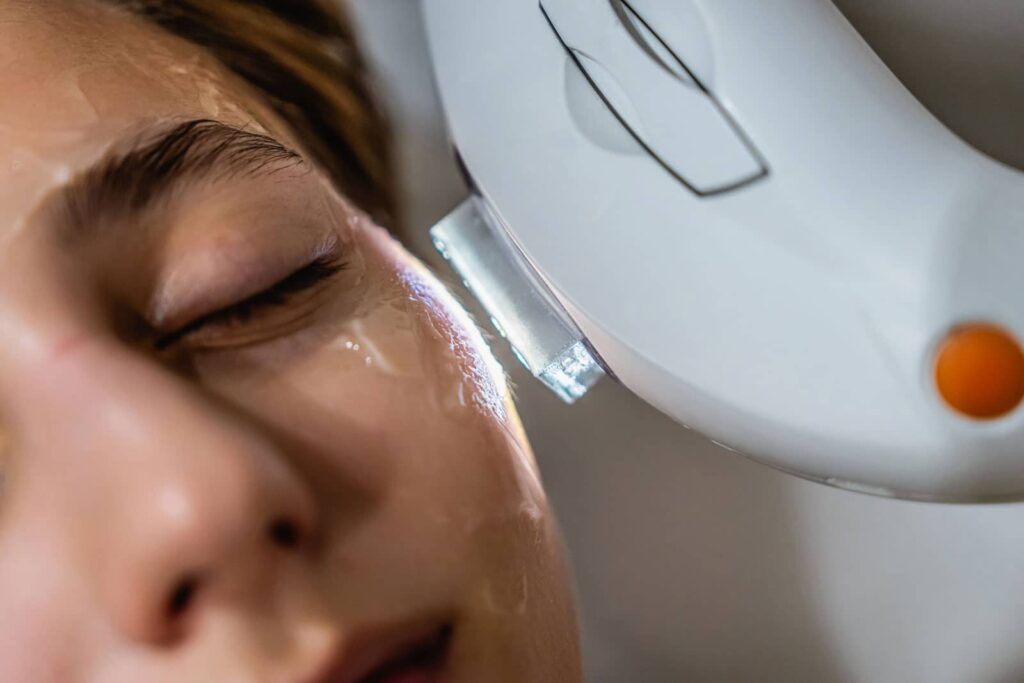
Lumecca vs BBL: Which IPL Photofacial Is Right for You?
Use these profiles as a starting point for your Lumecca vs BBL decision.
You May Prefer Lumecca If You…
- Want visible clearance of sun damage, brown spots, or redness in as few sessions as possible
- Have distinct age spots, freckles, or broken capillaries on the face, chest, hands, or arms
- Have fair to light-brown skin (Fitzpatrick I–IV)
- Plan to pair light therapy with collagen-building treatments such as Morpheus8 or Forma
- Prefer correction now, with occasional touch-ups later
You May Prefer BBL If You…
- Want one device to address pigment, redness, active acne, and hair reduction
- Prefer gentler, more gradual sessions and do not mind a longer series
- Like the structure of a year-round maintenance program
- Have a skin tone where your provider favors longer-wavelength filters
When to Hold Off on Any IPL Photofacial
IPL is not the right fit for everyone. Speak with a medical provider before treatment if you:
- Have a tan, recent sun exposure, or self-tanner on your skin. Tanned skin absorbs more light energy, which raises the risk of burns.
- Have melasma. Melasma is triggered by sunlight, hormones, and other factors, and heat-based treatments can aggravate it in some patients. The American Academy of Dermatology’s guide to melasma treatment emphasizes sun protection and topical medication first, with laser or light treatments as a possible add-on rather than a stand-alone solution.
- Take photosensitizing medications or have recently used isotretinoin.
- Notice a spot that is changing, bleeding, or irregular. Any suspicious lesion should be evaluated first, since IPL can change how a lesion looks and make future skin checks less reliable.
- Have deeply pigmented skin (Fitzpatrick V–VI). Other treatments may offer a better safety profile.
Why Tatoyan MD Medspa Offers Lumecca
When we evaluated IPL technology for our practice, we weighed the same Lumecca vs BBL trade-offs outlined above. Three factors made Lumecca our choice:
- Efficiency. Most of our Lumecca patients reach their goals in 1–3 sessions, which respects busy schedules and keeps the total number of visits low.
- Strength where it counts. In sunny Southern California, sun damage, brown spots, and redness are among the concerns we hear about most. Lumecca targets them directly.
- Synergy with our other services. Lumecca fits into a broader plan alongside Morpheus8, Forma, Hydrafacial, and The Perfect Derma Peel, so we can address color, texture, and firmness together, then protect results with medical-grade skinbetter science skincare. You can explore everything we offer on our services page.
Every treatment at Tatoyan MD Medspa is performed under the oversight of Dr. Tatoyan, our Medical Director. Before any photofacial, we assess your skin type, medical history, and goals to confirm IPL is the right tool, and we will tell you if a different treatment would serve you better.
Want to understand how pigment and collagen loss change over time? Our guide to the skin aging process from your 20s to 60s explains where photofacials fit at each stage. If texture and pores are your bigger concern, read our comparison of microneedling vs laser for skin texture and pores.
How to Prepare for Your IPL Photofacial
- Avoid direct, excessive sun exposure and tanning for at least one month before treatment
- Stop using self-tanners in the weeks leading up to your appointment
- Tell your provider about every medication and supplement, especially anything that increases sun sensitivity
- Ask whether to pause retinoids or exfoliating acids before your session
- Arrive with clean skin, free of makeup and lotion on the treatment area
- Commit to a broad-spectrum SPF 30 or higher every day afterward
Lumecca vs BBL FAQs: Your Top Questions Answered
1. Is Lumecca or BBL better for sun damage and brown spots?
Both work very well. In a Lumecca vs BBL comparison focused purely on sun damage, Lumecca’s high peak power and concentration in the 500–600 nm range often clear brown spots in fewer sessions. BBL reaches similar results through a gentler, more gradual series. The better choice depends on how quickly you want results and how your skin responds.
2. Which IPL photofacial is better for rosacea and facial redness?
Both devices treat the redness and visible vessels of rosacea, so for redness the Lumecca vs BBL difference is mostly about technique. Lumecca uses high peak power and a dedicated 580 nm vascular handpiece, while BBL relies on its 560 nm filter and multiple passes. Because rosacea is a chronic condition, periodic maintenance is usually needed with either device.
3. How many sessions will I need with Lumecca vs BBL?
Most Lumecca patients see significant clearance in 1–3 sessions. BBL is typically performed as a series of about three sessions, followed by maintenance one or more times a year. With either option, new sun exposure can bring pigment back, so occasional touch-ups help preserve your results.
4. Which hurts more, Lumecca or BBL?
Lumecca’s pulses are more concentrated, so they tend to feel slightly more intense, usually described as a quick elastic-band snap. BBL HERO’s in-motion technique uses several lower-energy passes, which many patients find gentler. Both devices have built-in cooling, and the sensation lasts only a moment per pulse.
5. Are Lumecca and BBL safe for darker skin tones?
IPL is safest on lighter skin. In a Lumecca vs BBL comparison for skin of color, Lumecca is generally used on Fitzpatrick types I–IV, while Sciton markets BBL HERO for types I–V using longer-wavelength filters. For deeply pigmented skin, the risk of burns and discoloration rises, and other treatments may be safer. A test spot and an in-person assessment are essential before any IPL photofacial.
Schedule Your Lumecca Consultation in Sherman Oaks
The Lumecca vs BBL choice ultimately depends on your goals, your skin type, and how you prefer to reach your results. In experienced hands, both are excellent IPL photofacials. If fast, targeted clearance of sun damage, brown spots, and redness is what you want, Lumecca delivers, and our physician-led team at Tatoyan MD Medspa is ready to design a plan around your skin.
Visit us at 5651 Sepulveda Blvd, Suite 102, Sherman Oaks, CA 91411, call (818) 848-6688, text (747) 304-1761, contact our team, or book your consultation online.