
The Skin Aging Process Explained: Stage-by-Stage Changes from 20s to 60s
August 31, 2026
What Is the Best Female Hair Loss Treatment for Postpartum Shedding?
September 28, 2026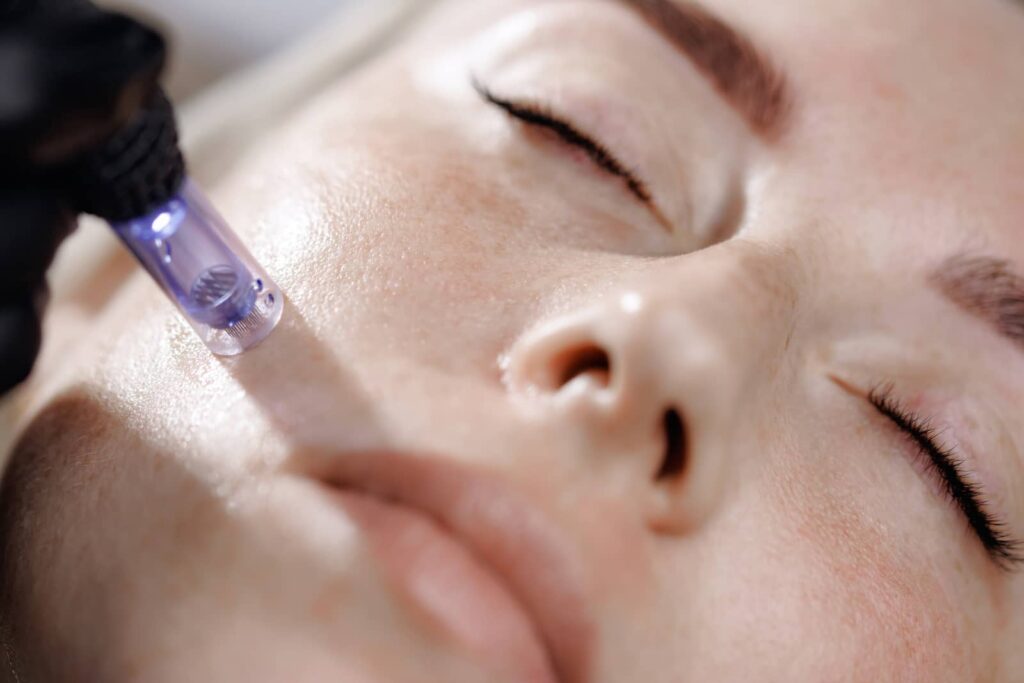
If you have spent any time researching how to smooth rough patches, refine enlarged pores, or fade acne scars, you have almost certainly landed on the same crossroads thousands of patients reach every year: the microneedling vs laser decision. Both treatments are heavy hitters in modern skin rejuvenation, both stimulate your skin to rebuild collagen, and both can genuinely transform skin texture and pores. But they are not interchangeable, and the right choice depends far more on your skin type than on which treatment is trending on social media this month.
At Tatoyan MD Medspa, our physician-led team has spent years helping patients navigate exactly this question. The short version? There is no universal winner in the microneedling vs laser debate. There is only the treatment that best matches your skin tone, your concerns, your tolerance for downtime, and your goals. This guide breaks down the science, the safety considerations, and the skin-type-specific guidance you need to choose with confidence.
Microneedling vs Laser: The Quick Answer
Before we go deep, here is the honest, no-fluff summary that most articles bury at the bottom.
- Microneedling creates tiny controlled punctures with fine needles to trigger your body’s own collagen response. It is minimally invasive, has short downtime, and is considered safe for all skin tones, including deeper skin of color.
- Laser treatments use focused light and heat to resurface or remodel the skin. They can deliver dramatic results for texture and scarring, but some lasers carry a higher risk of pigment changes, especially in darker skin.
So when patients ask us to settle the microneedling vs laser question in one sentence, we usually say this: microneedling is the more forgiving, all-skin-tones option, while certain lasers offer stronger resurfacing power for lighter skin types willing to accept more downtime. The rest of this article explains why, and how to apply that logic to your own face.

What Is Microneedling? Collagen Induction Therapy Explained
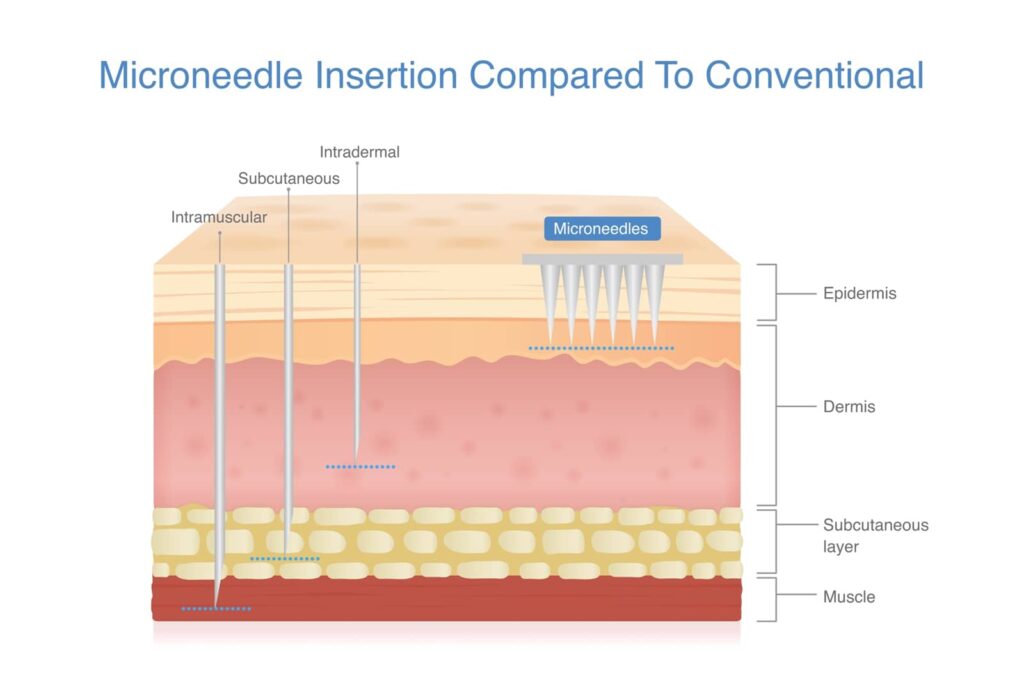
Microneedling, also known as collagen induction therapy, is a minimally invasive procedure that uses a device fitted with very fine, sterile needles to create thousands of microscopic channels in the skin. It sounds intense, but the needles are tiny, and the injuries are so small and controlled that most patients describe the sensation as mild pressure or light prickling after numbing cream. Trusted medical resources like Cleveland Clinic classify it as a minimally invasive treatment for concerns such as acne scars, stretch marks, and wrinkles.
Those micro-channels are the whole point. Your skin interprets them as damage that needs repair, which switches on a natural wound-healing cascade. According to a comprehensive clinical review published by the National Institutes of Health, these controlled micro-injuries stimulate the production of new collagen and elastin, the structural proteins responsible for firm, smooth, resilient skin. The result is a gradual improvement in tone and texture that builds over several weeks as your skin remodels itself.
Because microneedling relies on mechanical injury rather than light or heat, it does not target the pigment (melanin) in your skin. That single fact is the reason microneedling behaves so differently from lasers when we compare them across skin types, and it is central to the entire microneedling vs laser conversation.
How Microneedling Improves Skin Texture and Pores
For uneven skin texture, microneedling works by prompting the skin to lay down fresh collagen just beneath the surface, effectively plumping from within. Over a series of sessions, that added support smooths rough patches, softens fine lines, and refines the look of the skin. The American Academy of Dermatology notes that when properly performed, microneedling can lead to less noticeable scars and wrinkles and a more even skin tone and texture.
Enlarged pores respond well too. Pores often look larger when the collagen supporting their walls weakens, allowing them to sag open. By rebuilding that collagen scaffolding, microneedling helps tighten the skin around each pore so it appears smaller and more refined. It will not permanently shrink a pore, because no treatment does that, but it makes a visible, meaningful difference in how pores read on the skin.
Radiofrequency Microneedling (Morpheus8): Microneedling, Upgraded
Traditional microneedling is effective, but the technology has evolved. Radiofrequency (RF) microneedling adds controlled heat energy delivered through the needle tips, which supercharges the collagen response and reaches deeper layers of the skin. The AAD points out that some studies suggest RF microneedling can deliver results similar to a laser but with less downtime and fewer possible side effects.
At Tatoyan MD Medspa, our flagship RF microneedling device is Morpheus8. Morpheus8 is a fractional treatment that stimulates collagen production deep within the dermis, penetrating as far as 4mm, deeper than most microneedling devices, to remodel skin and improve texture, acne scars, and tone. Crucially for the microneedling vs laser discussion, Morpheus8 uses what the manufacturer calls color-blind technology, meaning it is designed to treat all skin types and tones safely, including deeper complexions that must approach many lasers with caution. That makes it one of the most versatile tools in our practice for texture and pore refinement.
What Does “Laser” Actually Mean? And Why IPL Isn’t a Laser
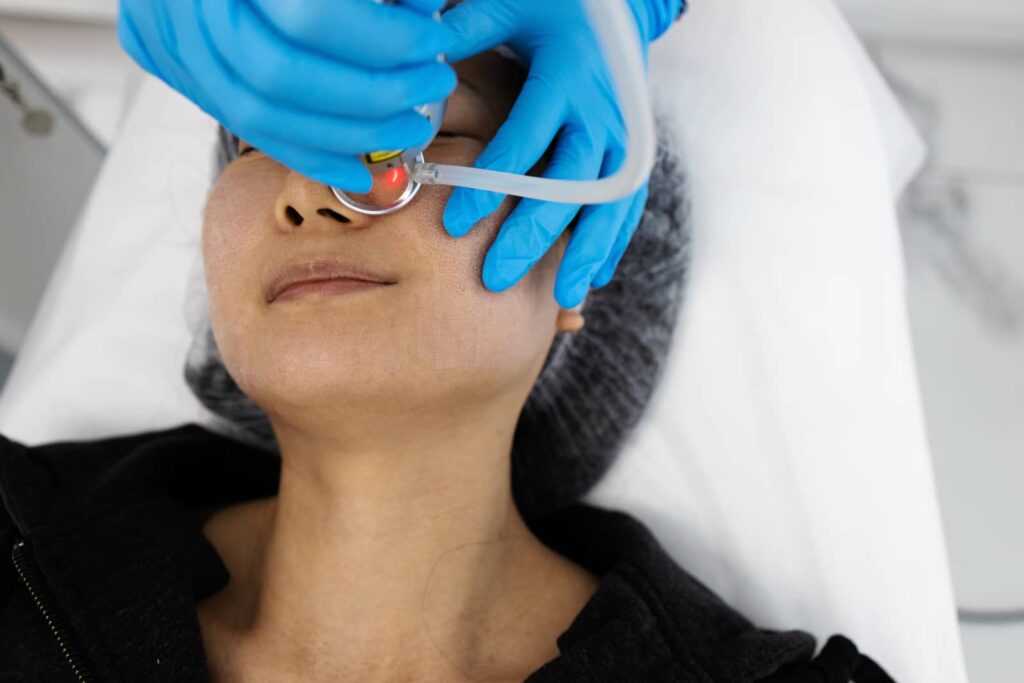
Here is where a lot of online advice goes wrong. People treat laser as a single treatment, but it is really an entire category, and lumping everything together is exactly how the microneedling vs laser comparison gets muddy and, frankly, medically inaccurate. To choose well, you need to know which type of light-based device is actually on the table.
Ablative Laser Resurfacing
Ablative lasers, such as fractional CO2 and erbium (Er:YAG) lasers, are the most aggressive resurfacing tools. They vaporize the outermost layers of skin, forcing a dramatic renewal as new, smoother skin forms during healing. For deep wrinkles, significant sun damage, and pronounced acne scarring in the right candidate, ablative laser resurfacing can produce impressive results in fewer sessions.
The trade-off is downtime and risk. Ablative lasers require real recovery, including days of redness, swelling, peeling, and careful aftercare. And because they generate significant heat, they carry a higher risk of complications in some patients. As the American Society of Plastic Surgeons explains, patients with darker skin tones have a greater risk of healing with hyperpigmentation after laser skin resurfacing. That is a decisive factor in the microneedling vs laser choice for anyone with medium or deeper skin.
Non-Ablative Fractional Lasers
Non-ablative fractional lasers (including 1540nm, 1550nm, and 1927nm wavelengths) take a gentler approach. Instead of removing the surface, they pass heat energy through the top layer to stimulate collagen in the dermis below, leaving the surface largely intact. That means shorter downtime and a lower risk profile than ablative resurfacing, with more gradual results delivered over a series of treatments.
Non-ablative lasers have also expanded what is possible for skin of color. Published research on non-ablative fractional laser systems indicates that certain wavelengths can be used safely and effectively across a range of Fitzpatrick skin types when performed by an experienced, appropriately trained provider. Still, they involve more heat than microneedling, so skin-type screening and conservative settings remain essential.
Where IPL and Lumecca Fit: It’s Light, Not a Laser
Now for the clarification that most microneedling vs laser articles miss entirely. Intense pulsed light (IPL), the technology behind our Lumecca treatment, is not a laser. A laser emits a single, focused wavelength of light. IPL emits a broad spectrum of light across many wavelengths. That difference matters clinically.
IPL like Lumecca is outstanding for what it is designed to do: brightening the skin, fading age spots and freckles, and clearing redness, broken vessels, and sun damage. It targets pigment and vascular concerns beautifully. What it is not is a primary texture-and-pore treatment. If your main goal is smoothing rough texture and refining pores, IPL is a supporting player, not the star.
There is also an important safety note. Because IPL works by targeting pigment, it is generally not recommended for darker skin tones, where it can raise the risk of burns and pigment changes. This is why, at Tatoyan MD Medspa, we never treat laser as one-size-fits-all, and why matching the technology to your skin type is non-negotiable.
Microneedling vs Laser for Skin Texture: Head-to-Head
When texture is the primary concern, whether rough patches, mild scarring, dullness, or crepey skin, both treatments can help, but they get there differently.
Microneedling improves texture by rebuilding collagen without stripping the surface. It is a steady, reliable performer that suits most people, produces natural-looking improvement over a series of sessions, and rarely causes dramatic downtime. For mild to moderate textural concerns, it is often the ideal starting point in the microneedling vs laser matchup.
Laser resurfacing, especially ablative laser, tends to win on raw power for severe texture and deep scarring. If you have significant photoaging or pronounced scarring and you have lighter skin that tolerates resurfacing well, a laser may reach a level of correction that microneedling matches only over many more sessions. The catch is always the same: more heat, more downtime, and for deeper skin tones, more risk. That is the constant tension in every microneedling vs laser resurfacing decision.
Microneedling vs Laser for Enlarged Pores: Which Wins?
Enlarged pores are one of the most common reasons patients ask us about the microneedling or laser choice, and the answer here leans toward microneedling for most people.
Pores look larger primarily because of weakened collagen and excess oil stretching the pore opening. Microneedling, and especially RF microneedling like Morpheus8, directly rebuilds the collagen that tightens the skin around each pore, while also being gentle enough for repeat sessions and suitable for nearly all skin types. For pore refinement specifically, that combination of effectiveness and safety is hard to beat.
Lasers can also improve the appearance of pores, particularly resurfacing lasers that smooth the surrounding skin surface. But for pores as an isolated concern, the added downtime and skin-type limitations of ablative lasers often make them overkill. Many patients get the pore refinement they want from microneedling without ever needing to weigh the heavier trade-offs of laser resurfacing.
Microneedling vs Laser: 7 Key Differences at a Glance
Sometimes the clearest way to settle a laser vs microneedling comparison is side by side. Here are the seven differences that matter most.
| # | Factor | Microneedling (incl. RF/Morpheus8) | Laser (Ablative & Non-Ablative) |
| 1 | How it works | Fine needles create micro-injuries to stimulate collagen | Focused light/heat resurfaces or remodels skin |
| 2 | Best for | Texture, pores, mild-to-moderate scars, all skin tones | Deep wrinkles, severe scarring, resurfacing (skin-type dependent) |
| 3 | Skin tone safety | Safe for all skin tones, including deep skin of color | Varies; ablative lasers riskier for darker skin |
| 4 | Downtime | Minimal, redness for 1 to 3 days | Moderate to significant, especially ablative |
| 5 | Pigment risk | Low, does not target melanin | Higher, particularly ablative on deeper tones |
| 6 | Sessions needed | Typically a series of 3 or more | Fewer for ablative; series for non-ablative |
| 7 | Results timeline | Gradual, building over weeks to months | Faster with ablative; gradual with non-ablative |
Use this table as a starting framework, not a final verdict. Your dermatologic provider should always personalize the microneedling vs laser recommendation to your skin.
How to Choose Based on Your Skin Type (Fitzpatrick Scale)
This is the heart of the matter. Dermatologists use the Fitzpatrick scale, a six-point system from very fair (Type I) to deeply pigmented (Type VI), to predict how skin responds to light-based treatments and how likely it is to develop post-inflammatory hyperpigmentation (PIH), the stubborn dark marks that can appear after inflammation or heat. Getting the microneedling vs laser decision right starts with knowing where you fall.
Fair to Light Skin (Fitzpatrick I to III)
If you have fair to light skin that rarely develops post-inflammatory pigment problems, you have the widest range of options. Your skin generally tolerates resurfacing lasers, including ablative CO2 and non-ablative fractional lasers, with a comparatively lower risk of lasting pigment changes. That means the choice between microneedling and laser for you comes down mostly to how much correction you need and how much downtime you can accept.
For mild texture and pores, microneedling is still an excellent, low-downtime choice. For deeper wrinkles or significant scarring, a resurfacing laser may be worth the recovery time. Many lighter-skinned patients ultimately use both over time, using microneedling for maintenance and laser for periodic deeper correction.
Medium to Olive Skin (Fitzpatrick III to IV)
Medium and olive skin sits in the nuanced middle. You can often tolerate certain lasers, but your risk of post-inflammatory hyperpigmentation is higher than in very fair skin, so aggressive ablative resurfacing and traditional IPL both require real caution. This is where the laser vs microneedling resurfacing decision gets genuinely case-by-case.
For this group, microneedling, and especially RF microneedling like Morpheus8, is frequently the safer, smarter first move. It delivers meaningful texture and pore improvement with a much lower pigment risk. If a laser is used at all, non-ablative fractional wavelengths with conservative settings and an experienced provider are the more appropriate path.
Deep Skin and Skin of Color (Fitzpatrick IV to VI)
For deeper skin tones, the microneedling vs laser calculation shifts decisively. Higher melanin means a higher risk of hyperpigmentation, burns, and scarring from heat- and light-based treatments, particularly ablative lasers and IPL, which are generally considered unsafe for darker skin in inexperienced hands.
Microneedling is widely regarded as one of the safest professional texture-and-pore treatments for skin of color precisely because it does not target melanin. RF microneedling with color-blind technology, like Morpheus8, was designed with this in mind and can treat deeper complexions that many lasers cannot safely address. If any laser is considered for skin of color, it should only be a carefully selected non-ablative device in the hands of a highly trained, physician-supervised provider. For the vast majority of texture and pore concerns in deeper skin, microneedling is simply the better answer.
Downtime, Cost, and Results: What to Expect
Beyond skin type, three practical factors shape the microneedling vs laser decision: recovery, budget, and timeline.
Downtime. Microneedling typically means one to three days of mild redness, similar to a light sunburn, after which most people return to normal activities and can wear makeup within a day or two. Non-ablative lasers usually require a few days of redness and mild flaking. Ablative laser resurfacing is the outlier, often requiring a week or more of visible recovery. If your calendar cannot absorb downtime, that alone may tilt the microneedling vs laser choice.
Cost. Pricing varies by provider, device, and how many sessions you need. Microneedling is generally more affordable per session but is usually done in a series, so plan for a package. Ablative laser resurfacing can be more expensive per treatment but may require fewer sessions. The most accurate number always comes from a personalized consultation.
Results. Microneedling delivers gradual, natural-looking improvement that continues to build for up to three months as collagen remodels. Ablative laser can show more dramatic change sooner, while non-ablative laser results accumulate across a series much like microneedling. Neither treatment is permanent, because collagen naturally declines with age, a process we explain in detail in our guide to the skin aging process. Periodic maintenance keeps results looking their best.
Can You Combine Microneedling and Laser?
You do not always have to pick a single winner in the microneedling vs laser debate. In experienced hands, these treatments can be sequenced to complement each other, using microneedling to rebuild collagen and refine texture and pores, paired with a light-based treatment like IPL to address pigment, redness, and sun damage that microneedling alone will not fully correct. Complementary options such as a Perfect Derma Peel or a HydraFacial can also support smoother, brighter skin between sessions.
This is where a personalized, physician-designed plan matters most. Combining energy-based treatments requires careful spacing, appropriate settings, and a provider who understands how your specific skin type will respond. Done thoughtfully, a combination approach can address multiple concerns at once. Done carelessly, it raises the risk of irritation and pigment problems. The lesson, once again: the microneedling vs laser question is best answered by an expert who is looking at your skin.
Microneedling vs Laser at Tatoyan MD Medspa
At Tatoyan MD Medspa, we approach every microneedling vs laser consultation the same way, by assessing your skin type, your specific concerns, and your goals before recommending anything. Our practice is physician-led, and that clinical foundation shapes how conservatively and precisely we match technology to skin.
For texture and pore refinement, our primary tool is Morpheus8 RF microneedling, which combines the collagen-building power of microneedling with radiofrequency heat and is safe for all skin tones. When pigment, sun damage, redness, or age spots are part of the picture, we may add Lumecca IPL, always with careful attention to whether your skin type is an appropriate candidate. You can explore these and more on our full list of skin rejuvenation services. This tailored approach is exactly why we caution against making the microneedling vs laser decision from a blog post alone: the internet can educate you, but only an in-person assessment can prescribe for you.
If you are weighing microneedling vs laser for your own skin, the smartest next step is a consultation with a qualified provider who can examine your complexion, review your history, and build a plan around your Fitzpatrick skin type. Book a consultation with our team to turn a general comparison into a confident, personalized decision.
Frequently Asked Questions
1. Is microneedling or laser better for acne scars?
It depends on the depth of your scars and your skin type. For mild to moderate atrophic acne scars, microneedling, and especially RF microneedling, is highly effective and safe across all skin tones. For deep, severe scarring in lighter skin that tolerates resurfacing, an ablative laser may achieve more dramatic correction. In deeper skin tones, microneedling is usually the safer choice because it does not target melanin. When comparing microneedling and laser for scars, many patients start with microneedling and escalate only if needed.
2. Which is safer for dark skin, microneedling or laser?
Microneedling is generally the safer option for dark skin. Because it works mechanically rather than by targeting pigment, it carries a low risk of post-inflammatory hyperpigmentation, and dermatologists consider it safe for all skin tones. Many lasers, particularly ablative lasers and IPL, carry a higher risk of pigment changes and burns in deeper complexions. If a laser is used on skin of color at all, it should be a carefully chosen non-ablative device with an experienced, physician-supervised provider.
3. How many sessions will I need to see results?
Microneedling is typically performed in a series, often three or more sessions spaced about four weeks apart, with results building for up to three months afterward. Ablative laser resurfacing may achieve results in fewer sessions but with more downtime, while non-ablative lasers usually require a series similar to microneedling. Your provider will recommend a specific plan based on your concerns and how your skin responds.
4. Does microneedling or laser hurt more?
Both are made comfortable with topical numbing cream. Microneedling is usually described as mild pressure or light prickling, with minimal discomfort. Laser sensations vary by device: non-ablative lasers feel like brief heat or snapping, while ablative resurfacing is more intense and may involve more post-treatment discomfort. Overall, microneedling tends to be the gentler experience of the two, which is part of why it appeals to first-timers.
5. Is IPL the same as laser treatment?
No. Intense pulsed light (IPL), such as Lumecca, is often grouped with lasers, but it is technically different. A laser emits a single focused wavelength, while IPL emits a broad spectrum of light. IPL excels at treating pigment and vascular concerns, including age spots, freckles, redness, and sun damage, rather than serving as a primary texture-and-pore resurfacing treatment. It is also generally not recommended for darker skin tones. Understanding this distinction is key to making an informed microneedling vs laser choice.