

Thermage vs Ultherapy: The Complete Non-Surgical Facelift Breakdown (2026)
May 25, 2026
Chin Botox: Can Botox Help With a Double Chin?
June 22, 2026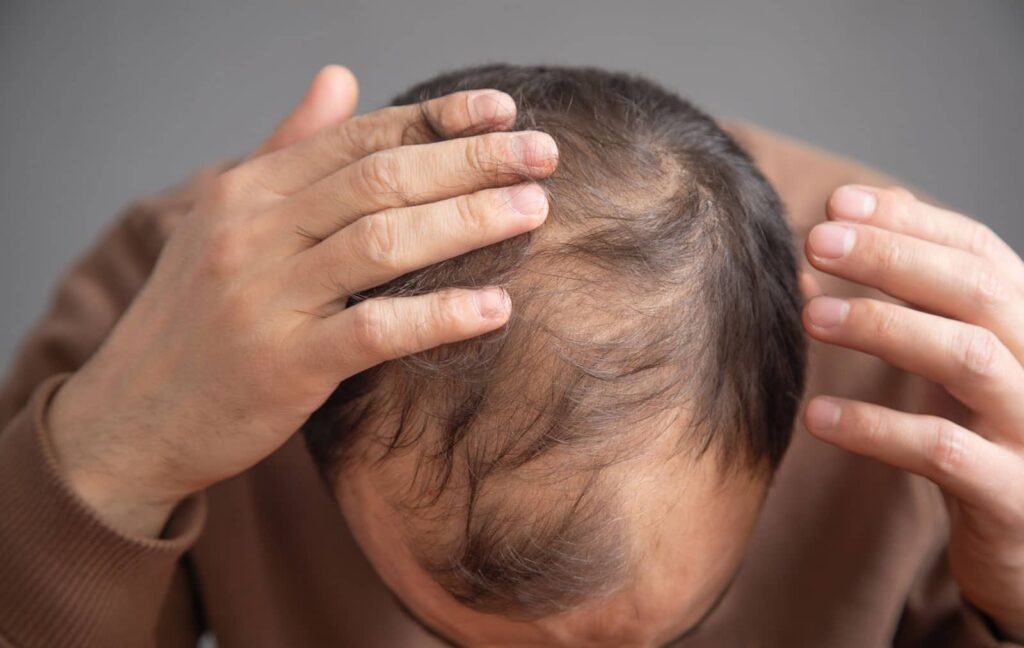
If you’ve been Googling your hairline lately, you’re in good company. Hair loss affects tens of millions of men worldwide, and the sheer volume of products, supplements, and miracle promises online makes the truth almost impossible to find. Shampoos that claim to “stop shedding overnight.” Serums that promise a full head of hair in 30 days. The noise is deafening, and most of it is simply not true.
This guide cuts through all of it.
At Tatoyan MD Medspa, our board-certified physicians work with men experiencing hair thinning and hair loss every single day. We’ve written this comprehensive resource to give you honest, clinically grounded information, covering everything from what causes hair loss in men to the most advanced treatments available right now. Whether you’ve just noticed the first signs of thinning or you’ve been dealing with this for years, there is a path forward, and it starts with understanding what’s actually happening on your scalp.
What Causes Hair Loss in Men? The Biology Behind the Battle
Before you can choose the right hair loss solution for men, you need to understand why the loss is happening in the first place. Not all hair loss is the same. Not all treatments address the same mechanisms. A misdiagnosis, or worse, self-diagnosis, leads to wasted time, money, and the permanent loss of follicles that could have been saved.
The Most Common Culprit: Androgenetic Alopecia
The overwhelming majority of male hair loss, roughly 95% of cases, is caused by androgenetic alopecia, the clinical term for male pattern baldness. It is a genetically inherited, hormonally driven condition that results in the gradual miniaturization of hair follicles on the scalp.
Here’s the mechanism: testosterone in the body is converted into dihydrotestosterone (DHT) by an enzyme called 5-alpha reductase. In men who are genetically sensitive to DHT, this hormone binds to receptors in hair follicles and slowly shrinks them, a process called follicle miniaturization. Over time, affected follicles produce progressively thinner, shorter, lighter hairs until they eventually stop producing hair entirely.
According to the National Institutes of Health (NIH), androgenetic alopecia affects approximately 50 million men in the United States and is the leading driver of hair loss across all age groups.
The progression of male pattern baldness is typically classified using the Norwood-Hamilton Scale, a seven-stage system that maps hair loss from a slightly receding hairline (Stage I) to complete baldness on the top of the scalp (Stage VII). Understanding where you fall on this scale is one of the most important first steps in designing an effective treatment protocol.
Other Conditions That Cause Thinning Hair in Men
While androgenetic alopecia dominates the conversation, several other conditions contribute significantly to thinning hair in men:
- Telogen Effluvium: A sudden, widespread shedding triggered by physical or emotional shock, illness, surgery, significant weight loss, severe psychological stress, or even a high fever. This condition pushes a large proportion of follicles prematurely into the resting phase simultaneously, causing alarming daily shed counts. The good news: telogen effluvium is usually temporary.
- Alopecia Areata: An autoimmune condition in which the immune system mistakenly attacks hair follicles, producing circular patches of hair loss on the scalp, beard, or other body areas. It can affect men at any age and varies enormously in severity.
- Nutritional Deficiencies: Inadequate iron, zinc, vitamin D, biotin, and protein can each disrupt the hair growth cycle and accelerate shedding, particularly in men on restrictive diets.
- Thyroid Dysfunction: Both hypothyroidism (underactive) and hyperthyroidism (overactive) interfere with hair follicle cycling, causing diffuse thinning across the scalp.
- Scalp Conditions: Seborrheic dermatitis, psoriasis, and fungal infections create inflammatory scalp environments that weaken follicles and accelerate loss.
- Medications: Blood thinners, beta-blockers, certain antidepressants, retinoids, and chemotherapy agents are all associated with drug-induced hair loss.
Clinical Note from Tatoyan MD Medspa: Our evaluation protocol for every new hair loss patient includes a comprehensive blood panel, checking ferritin, thyroid function, vitamin D, zinc, testosterone, and DHT levels, alongside a detailed scalp analysis. Many men have treatable underlying factors that, once addressed, dramatically improve their response to hair restoration therapies.
Early Signs of Hair Loss in Men: Don’t Wait Until It’s Too Late
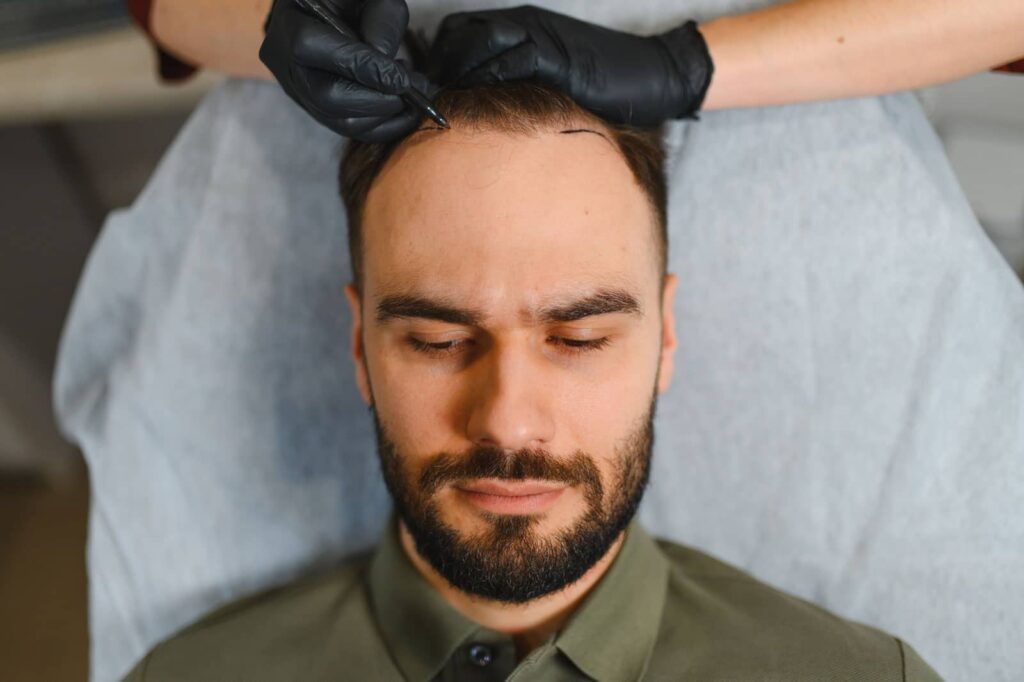
One of the most consistent findings in hair restoration medicine is that early intervention produces exponentially better outcomes. Once a follicle has miniaturized completely and died, no treatment, medical or surgical, can bring it back. This makes recognizing the early signs of hair loss in men not just useful, but genuinely critical.
Here are the warning signals most men miss or dismiss:
- A gradually receding hairline, particularly at the temples, often so slow it’s only noticed in old photographs
- Increased hair in the shower drain or on your pillow each morning, some daily shedding is normal (50–100 hairs), but significantly more warrants attention
- Visible scalp through wet hair that wasn’t there before, especially at the crown or along the part
- Finer, lighter, shorter hairs replacing thicker ones in previously dense areas, this is miniaturization happening in real time
- A widening part line or increasing scalp visibility under certain lighting conditions
- A noticeably smaller ponytail or bun circumference if you have longer hair
If you’re experiencing two or more of these signs, the best thing you can do is book a professional evaluation now, not in six months, not after trying three different shampoos. The follicles that are thinning today are still alive and treatable. That window closes faster than most men realize.
Can Hair Loss Be Reversed in Men? The Honest Answer
This is the question every man asks, and the answer is nuanced, hopeful, and ultimately dependent on timing.
Yes, hair loss can be partially or significantly reversed in men, but only when follicles are still alive. The key concept is the distinction between miniaturized follicles and dead follicles:
- Miniaturized follicles are still active but producing increasingly thin, weak hairs. These follicles can respond to treatment. DHT-blocking medications can halt further shrinkage. Minoxidil can stimulate regrowth. PRP and exosome therapy can rejuvenate follicle health. Many men see meaningful density improvements.
- Dead follicles, those that have fully atrophied and ceased producing any hair at all, cannot be regenerated by any currently available medical treatment. The only way to restore hair coverage in these areas is through surgical transplantation.
The practical implication: if you begin a comprehensive male pattern baldness treatment protocol early, before significant follicle death has occurred, can hair loss be reversed in men? Yes, to a remarkable degree. If you’ve been losing hair for decades without treatment, the expectations shift from reversal to stabilization and density improvement in surviving follicles, combined with surgery to address the fully bald zones.

FDA-Approved Male Pattern Baldness Treatments: The Clinical Foundation
For any effective hair loss solution for men, the starting point is what the science has proven. Two medications have FDA approval specifically for male pattern baldness, and both have decades of safety and efficacy data behind them.
Minoxidil: The Most Accessible Men’s Hair Regrowth Treatment
Minoxidil was originally developed as an oral blood pressure medication in the 1970s, when a peculiar side effect was observed: patients were growing hair. Today, it is available over the counter in topical form (2% and 5%) and by prescription in oral form.
How it works: Minoxidil is a vasodilator, it widens blood vessels around the hair follicle, improving blood flow and nutrient delivery. More importantly, it prolongs the anagen (active growth) phase of the hair cycle and appears to directly stimulate follicle stem cells. The result: thicker, longer, stronger hairs in areas where follicles remain active.
Clinical data consistently shows that approximately 60% of men experience measurable hair regrowth with regular 5% topical minoxidil use over 12 months. Oral minoxidil at low doses (0.5–2.5mg daily) is increasingly prescribed by physicians and may offer superior systemic distribution with better tolerability than daily topical application.
What to know:
- Apply to the scalp (not the hair) once or twice daily for topical formulations
- Expect an initial shedding phase in the first 2–4 weeks, this is normal and indicates the treatment is working
- Results require patience: 3–6 months for early changes, full assessment at 12 months
- Minoxidil is a maintenance treatment, discontinuing reverses all gains within 3–6 months
Finasteride: Targeting DHT to Stop Hair Loss in Men at the Source
If minoxidil works on the surface, finasteride works at the hormonal root. As a prescription oral medication, finasteride inhibits the enzyme 5-alpha reductase, blocking up to 70% of DHT production in the scalp. By eliminating the primary hormonal signal driving follicle miniaturization, finasteride stops the disease process itself.
According to data reviewed by the U.S. Food and Drug Administration (FDA), finasteride at 1mg daily:
- Stops progression of hair loss in over 83% of men
- Produces visible regrowth in approximately 66% of men after two years of continuous use
- Maintains results long-term with consistent daily use
Dutasteride, a related medication that inhibits both isoforms of 5-alpha reductase rather than just one, is increasingly prescribed off-label and may be more effective than finasteride for some men, though it carries a longer half-life and comparable side effect considerations.
Important considerations:
- Finasteride requires a prescription and should only be initiated under physician supervision
- A small percentage of men (2–3%) experience reversible sexual side effects including decreased libido or erectile changes
- Results require 6–12 months of consistent use before meaningful assessment
- Do not stop without discussing with your prescribing physician
⚠ Medical Disclaimer: Finasteride and oral minoxidil are prescription medications. At Tatoyan MD Medspa, every patient receives a thorough medical evaluation before any prescription is written. Self-medicating with unregulated sources carries real clinical risks.
How to Stop Hair Loss in Men: Advanced In-Office Treatments
Beyond daily medications, the question of how to stop hair loss in men, and actively stimulate regrowth, has entered an exciting new era. Regenerative medicine has brought a suite of powerful in-office treatments that go far beyond what a pill or topical can achieve alone.
Platelet-Rich Plasma (PRP) Therapy
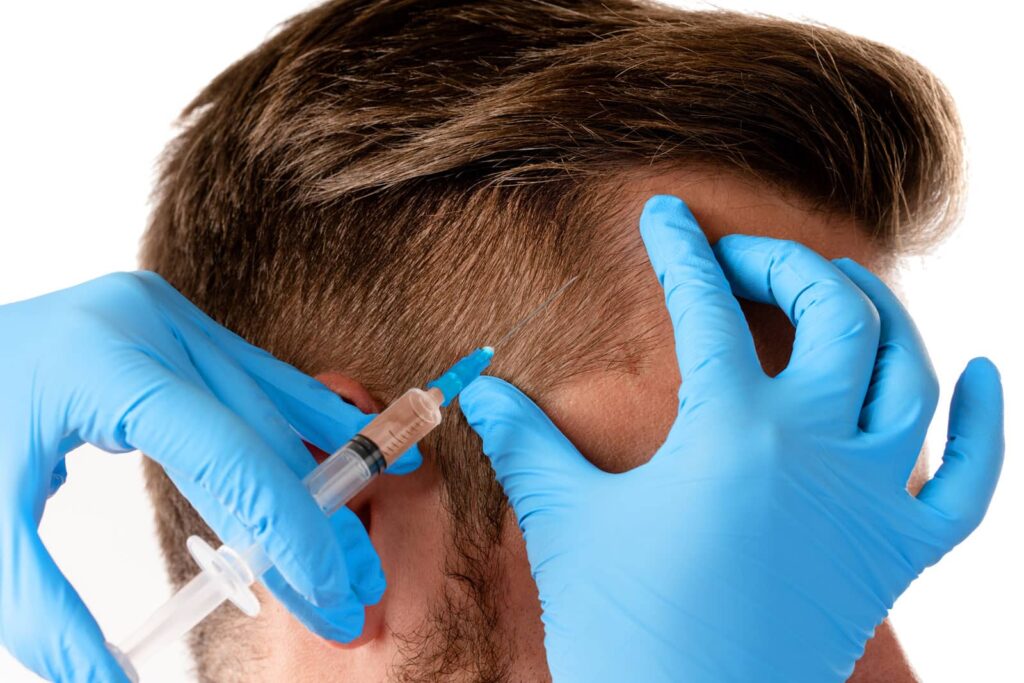
PRP therapy is one of the most well-supported in-office treatments for male hair loss, and it remains a cornerstone of our approach at Tatoyan MD Medspa. The procedure uses your own biology to stimulate follicle health:
- A small blood sample is drawn from your arm
- The blood is placed in a centrifuge that separates and concentrates the platelet-rich plasma
- This plasma, rich in growth factors including PDGF, VEGF, TGF-β, and IGF-1, is injected into targeted areas of the scalp
- These growth factors stimulate follicle stem cells, improve scalp vascularity, reduce follicle inflammation, and shift more follicles back into the active growth phase
Multiple peer-reviewed studies confirm PRP’s efficacy for androgenetic alopecia in men, with consistent improvements in hair density, hair diameter, and follicle count. PRP works best as part of a combined protocol, alongside minoxidil and finasteride, and is most effective in the early-to-moderate stages of hair loss.
Typical protocol: 3–6 initial sessions spaced 4–6 weeks apart, followed by quarterly maintenance treatments.
Exosome Therapy: The Frontier of Men’s Hair Regrowth
Exosome therapy represents perhaps the most compelling emerging treatment in hair restoration medicine as of 2026. Exosomes are nano-sized vesicles secreted by stem cells that carry a powerful payload of proteins, lipids, mRNA, and signaling molecules capable of reprogramming cellular behavior.
When applied to the scalp, either through injection or microneedling channels, exosomes communicate directly with hair follicle stem cells, triggering regenerative pathways that can reactivate dormant follicles and improve the overall biological environment of the scalp. Early comparative studies suggest exosome therapy may outperform traditional PRP in follicle density outcomes, and combining the two modalities shows particularly strong results.
At Tatoyan MD Medspa, we evaluate each patient individually to determine whether PRP, exosomes, or a combined regenerative protocol is most appropriate for their stage of hair loss and treatment goals.
Microneedling with Growth Factor Serums
Microneedling, the application of controlled micro-injuries to the scalp surface using a fine-needle device, triggers the skin’s wound-healing cascade and increases the permeability of the scalp to topical agents. When combined with growth factor serums, platelet lysates, or topical minoxidil applied immediately after, the results significantly exceed those of topical application alone.
Monthly sessions over 4–6 months have demonstrated measurable improvements in hair density in clinical studies, and microneedling synergizes strongly with at-home minoxidil use.
Low-Level Laser Therapy (LLLT)
FDA-cleared LLLT devices use specific wavelengths of red light to stimulate cellular metabolism in hair follicles through a process called photobiomodulation. Laser caps and helmets designed for home use have been clinically validated as adjunct therapies, particularly for men using them consistently 3 times per week alongside medical treatment. While LLLT is unlikely to produce dramatic results as a standalone treatment, as part of a comprehensive protocol it contributes meaningfully to overall hair density.
Hair Transplant for Men: When Surgery Is the Right Answer
For men with more advanced hair loss, or those seeking a permanent, definitive solution, a hair transplant for men remains the gold standard of hair restoration. Modern surgical techniques bear little resemblance to the obvious, doll-like “plugs” associated with early transplant procedures. Today, skilled surgeons can produce results that are genuinely indistinguishable from natural hair growth.
FUE vs. FUT: Understanding Your Options
Follicular Unit Extraction (FUE) is currently the most popular surgical technique. Individual follicular units are harvested directly from the donor area (typically the back and sides of the scalp) using a micro-punch tool, then transplanted into the recipient areas. FUE leaves no linear scar, requires minimal downtime, and produces highly natural-looking results. It is ideal for men who prefer shorter hairstyles or need smaller-to-medium graft counts.
Follicular Unit Transplantation (FUT), also called the strip method, involves removing a horizontal strip of scalp from the donor area, dissecting it into individual follicular units, and transplanting those units into thinning areas. FUT allows for higher graft counts per session and may be more appropriate for men requiring extensive coverage. It does leave a linear scar, though this is typically well-concealed by surrounding hair.
Robotic and AI-assisted FUE (using systems like ARTAS iX) adds a layer of precision and consistency to follicle harvesting, reducing transection rates and optimizing graft selection, increasingly available at leading hair restoration centers.
Who Is the Right Candidate for a Hair Transplant?
The ideal surgical candidate is a man who:
- Has stabilized hair loss, not in an active rapid shedding phase
- Has adequate donor density at the back and sides of the scalp
- Is in good general health with no contraindications to local anesthesia or minor surgical procedures
- Has realistic expectations, understanding that full results take 12–18 months to appear, and that medical therapy should continue post-surgery to protect remaining native hair
Men in the early stages of hair loss often benefit most from starting with non-surgical options first, while surgery is reserved for those with more advanced loss or for those who want to address fully bald areas that medication cannot restore.
What to Expect Post-Transplant
The transplanted grafts typically shed within the first 2–4 weeks post-procedure, this is completely normal and does not mean the transplant has failed. New hair growth from the transplanted follicles begins at 3–4 months, with continued thickening and density improvement through the full 12–18 month maturation period. The transplanted hair is permanent and can be cut, styled, and treated just like natural hair.
Men’s Hair Regrowth: Building Your Personalized Protocol
The most important principle in modern hair restoration medicine is this: combination therapy consistently outperforms any single treatment. The men who achieve the best outcomes are those who layer synergistic therapies strategically, under medical supervision.
Here is a framework based on the Norwood Stage of hair loss:
Early Stage Hair Loss (Norwood I–II)
- Oral or topical minoxidil (5% topical or low-dose oral)
- Finasteride 1mg daily (or dutasteride if better suited)
- Ketoconazole or zinc pyrithione-based scalp shampoo
- Nutritional optimization (blood panel to identify and correct deficiencies)
- Regular scalp massage (5–10 minutes daily)
Moderate Hair Loss (Norwood III–IV)
All of the above, plus:
- PRP therapy series (3–6 sessions, then quarterly)
- Microneedling with growth serums (monthly, 4–6 sessions)
- FDA-cleared LLLT device for at-home use 3x/week
- Consider exosome therapy for enhanced follicle stimulation
Advanced Hair Loss (Norwood V–VII)
- Medical stabilization first (minoxidil + finasteride to halt further progression)
- FUE or FUT hair transplant for permanent coverage of bald zones
- Post-operative exosome or PRP therapy to support graft survival and density
- Ongoing medical therapy to protect remaining native hair
Lifestyle Strategies That Support Every Hair Loss Solution for Men
No medical treatment works in isolation. A solid lifestyle foundation amplifies the results of every hair loss therapy you pursue, and its absence can undermine even the most sophisticated protocol.
Nutrition for Scalp Health and Hair Growth
According to the NIH Office of Dietary Supplements, several micronutrients play documented roles in hair follicle cycling:
- Iron / Ferritin: Ferritin levels below 40 ng/mL are associated with significant hair shedding. Get tested before supplementing.
- Vitamin D: Follicle cells contain vitamin D receptors; deficiency is linked to accelerated pattern loss and telogen effluvium.
- Zinc: Supports follicle repair, protein synthesis, and sebaceous gland function. Found in oysters, pumpkin seeds, red meat, and lentils.
- Omega-3 Fatty Acids: Reduce scalp inflammation and support the lipid environment around follicles. Found in fatty fish, flaxseed, and walnuts.
- Biotin (B7): Supports keratin production; supplementation helps primarily in deficient individuals.
- Protein: Hair is made of keratin, dietary protein is its literal building block. Aim for 0.8–1.2g per kilogram of body weight daily.
Stress, Sleep, and the Hair Growth Cycle
Chronic psychological stress elevates cortisol, which disrupts the hair follicle cycle and can trigger large-scale shedding (telogen effluvium). Quality sleep, 7–9 hours nightly, is when cellular repair and growth hormone secretion are at their peak. Consistent aerobic exercise improves scalp circulation and modulates the hormonal environment in ways that support follicle health.
These are not optional extras. They are evidence-backed supports for every other treatment you pursue.
Scalp Care Best Practices
- Use a DHT-blocking shampoo containing ketoconazole (1–2%), saw palmetto, or zinc pyrithione consistently
- Avoid excessive heat styling and tight hairstyles that create chronic traction on follicles
- Keep the scalp clean, excess sebum and product buildup can clog follicles and create inflammatory conditions
- Stay well hydrated; scalp health reflects systemic hydration
Common Myths About Hair Loss in Men, Debunked
Misinformation about thinning hair in men is everywhere. Let’s put the most persistent myths to rest:
- “Hair loss comes from your mother’s side.” False. Male pattern baldness is polygenic, genes from both parents influence susceptibility. Your dad’s hairline matters as much as your maternal grandfather’s.
- “Wearing hats causes baldness.” False. Hats do not restrict blood flow to follicles in any clinically meaningful way.
- “Washing your hair too much causes loss.” False. The hair you see in the drain after shampooing was already in the shedding phase. Regular cleansing actually supports scalp health.
- “Hair loss only happens to older men.” False. Androgenetic alopecia can begin as early as the late teens. Many men notice significant thinning in their 20s.
- “Supplements alone can reverse baldness.” False. While correcting nutritional deficiencies reduces excess shedding, no supplement overrides genetic androgenetic alopecia.
- “Hair transplants always look fake.” False, for outdated techniques. Modern FUE performed by skilled surgeons produces results that are routinely indistinguishable from natural hair.
Frequently Asked Questions About Hair Loss Solutions for Men
1. What is the most effective hair loss solution for men in 2026?
The most effective approach in 2026 is a personalized, multi-modal protocol, not any single treatment. For most men with androgenetic alopecia, the strongest results come from combining a DHT-blocking medication (finasteride or dutasteride) with topical or oral minoxidil, supported by in-office regenerative therapies such as PRP or exosome treatment. Advanced or long-standing hair loss may also require surgical hair transplantation to restore permanently bald areas. Every protocol should be designed by a qualified medical professional based on your specific pattern of loss, health history, and goals. At Tatoyan MD Medspa, we build individualized plans, not generic templates
2. What are the earliest signs of hair loss in men I should watch for?
The early signs of hair loss in men include a gradually receding hairline at the temples, increased daily shedding (notably more hair in the shower or on your pillow), a widening part line, and finer or lighter hairs replacing thicker ones in previously dense areas, particularly at the crown. Many men also notice more scalp visible through wet hair than they remember. If two or more of these signs are present, a professional evaluation is strongly recommended. Early detection is the single greatest advantage you can have in hair restoration.
3. Can hair loss be reversed in men, or can it only be stopped?
Both outcomes are possible depending on when treatment begins. In the early and moderate stages of androgenetic alopecia, when follicles are miniaturized but still alive, treatments like finasteride and minoxidil can halt further progression and stimulate meaningful regrowth. Regenerative therapies like PRP and exosomes can further reactivate dormant follicles. However, follicles that have fully atrophied and died cannot be revived by any medical treatment, only a hair transplant can restore coverage there. The earlier you begin, the more realistic reversal becomes as a goal rather than just stabilization.
4. How long does it take to see results from male pattern baldness treatment?
Patience is essential with every hair loss treatment. Topical minoxidil typically shows early changes at 3–6 months and full results at 12 months. Oral finasteride stabilizes loss within 3–6 months with meaningful regrowth assessed at 12–24 months. PRP therapy shows gradual density improvements over 3–6 months following an initial series. Hair transplant surgery requires 12–18 months for full maturation, transplanted grafts shed initially (normal), then regrow permanently. Consistency and commitment to the full timeline are critical. Most men who “fail” treatment quit too early.
5. Is a hair transplant for men the right solution for me?
A hair transplant for men is the right solution when medical therapies have been optimized and significant areas of permanent hair loss remain that cannot respond to medications or regenerative treatments. The ideal candidate has stable hair loss, adequate donor density at the back and sides of the scalp, good general health, and realistic expectations about outcomes and timeline. For men in earlier stages, non-surgical options often deliver excellent results and should be exhausted first. For men with more advanced loss, surgery combined with ongoing medical therapy is frequently the most complete and lasting solution. A consultation with a qualified physician is the only way to determine which path is right for your specific situation.
Take the First Step Toward Real Results
If you’ve read this far, you already know more about hair loss solutions for men than most men ever learn, and that knowledge is your most powerful tool. The next step is turning that understanding into action.
At Tatoyan MD Medspa, our board-certified medical team is ready to evaluate your hair loss, identify its root causes, and design a protocol built specifically around you, not a one-size-fits-all answer, but a personalized clinical plan grounded in the best of modern hair restoration science.
Don’t wait for the loss to get worse. The follicles that are thinning today are still treatable. The window to achieve real reversal closes with time.
📅 Book your personalized hair loss consultation at Tatoyan MD Medspa →